

William H. Truettner: A Life Well Lived
We welcome your responses and reminiscences in the Comments section below.
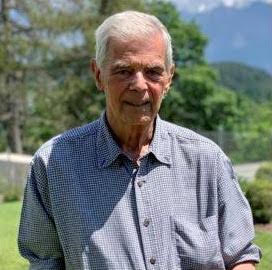
When I arrived as a predoctoral fellow at the old National Museum of American Art in 1990, Bill Truettner, my official mentor, was the first person I met. He bought me lunch, not on the company dime as I recall, and asked me to talk about my research with a genuine curiosity, the kindness and intellectual integrity of which struck me immediately. As I learned over the decades to come, he was a wonderful man—certainly among the wisest, most generous, selfless, and loyal colleagues and friends I’ve ever known. That long ago day I discovered that he not only had read my application but thought seriously about it, interested as much in how I had framed the art-historical questions that interested me as in the topic of my research, which clearly mattered a great deal to him as well. He asked about a book I had recently translated. He asked about my thesis advisors at Yale whose work he knew and respected. He clearly understood a great deal more about the revisionist approaches to American art history then afoot in the academy than was strictly necessary for a senior curator merely interested in navigating the museum world in which he had made his career. Public collections, as he well knew, though somewhat sheltered from the controlling influence of corporate patronage, were especially vulnerable to political pressures to conform to an inherently adulatory model of historical non-interpretation, but Bill impressed me from that first meeting as a true intellectual, interested in the complexity of history as evidenced by visual culture, sincerely open to new methods and ideas. We ate outdoors in the museum courtyard (which would remain unenclosed for another two decades), and he took the trouble to introduce me to each of my new colleagues who happened by, making me feel at home.
§
That moment seems long ago now. We were just three to hold predoctoral fellowships that year, and each of us benefited from Bill’s gentle guidance, his unwavering respect for the individuality of our differing approaches to research, and an openness to close pictorial analysis as grounds for historical interpretation, a methodology we all shared. I was perhaps too absorbed in my own work to understand properly at the time the degree of his own investment in the matter of art history’s responsibilities to truth, for he was—from his open carrell in the library, a familiar sight surrounded by books—busy orchestrating the infamously controversial exhibition that would come to define his long career in public service; a fraught effort to demythologize a body of familiar images resituated in historical context, recognized as overdetermined in meaning; a mode of analysis resistant to closure as reflected in its mostly forgotten aspirational subtitle Reinterpreting Images of the Frontier. He invited me to write what proved to be some of the most controversial wall texts for that exhibition, agreeing that I could do so anonymously, sparing me some of the fallout if also the potentially career-enhancing notoriety.
§
There’s little point in revisiting the ensuing debacle here other than to note the dignity with which he weathered it and the burden of responsibility he shouldered for years in attempting to set the record straight while the academic contributors involved mostly went on with their careers. What has been lost to view in myriad retellings is Bill’s role as among the very first curators of his generation to embrace, for better and worse, ideas and methods borrowed, as it were, across the aisle from the academy, the interpretive sophistication of which on occasion, though less and less, has offered a balanced corrective to the self-serving anti-intellectual biases of much museum curation. I like to think his role as a graduate advisor informed this openness to innovation, exposing him to generations of young scholars to whom he offered an invaluable model of integrity, critical intelligence, kindness, and humility.
§
In hindsight, the vitriol of the abuse he rose above seems almost quaint compared with that of current directives “to celebrate American exceptionalism” by removing “divisive or politicized narratives” from the walls of the Smithsonian to “restore confidence in our shared cultural institutions,” yet his example serves as a reminder of the inspiration that resistance to predetermined readings of the past can offer. In his last years, stooped with age, having tolerated more institutional disrespect than most among us could or would have managed, though occasionally struggling with recrimination and self-doubt, he never faltered in his resolve or his commitment to art history. His gentility and forbearance—not simply the mistreatment he tolerated through the late years of his active professional life but the graciousness with which he did so—have marked me deeply. He acted always in the interest of what he saw as his professional responsibilities to write the necessary books, to mentor students, to be a good colleague, to make sense of history. His easy laughter in the courtyard that day we first met still warms my heart. His death marks a great loss.
About the Author(s): Kenneth Haltman has just completed a critical translation of Jean Lancri’s Duchamp et le fantôme de Marcel: Trois essais sur la part de l’ombre dans Étant donnés (Paris: Éditions de la Sorbonne, 2021) as Duchamp’s Ghost: Textual and Visual Responses to the Role of Shadow in Étant donnés.