

2027 Digital Dialogues Call for Proposals





Digital Dialogues explores the current landscape of digital scholarship and emerging technologies, interrogating how new tools might redefine how art is produced, critiqued, studied, conserved, and taught. In addition to evaluating born-digital projects, this section serves as a forward-looking forum that encourages digital literacy. We therefore encourage timely, responsive contributions that probe the possibilities and provocations of new and emerging tech, investigating how developments in digital, computational, and algorithmic cultures might actively transform the field of American art history.
Editors’ Proposal:
In both personal and professional settings, responsibilities are ever-increasing for scholars working at the intersections of academic practice, data archives, and museum collections. At their foundational core, the technologies developed to aid us are meant to consolidate workflows, streamline communication, and facilitate new skills and approaches. Technological convenience, however, can come with inherent challenges that may not be immediately apparent to the user. What happens when new systems needlessly complicate divisions of labor, impede collaboration, or limit creative expression? How can humanists better support, advocate, and mediate digital knowledges for the broader field of American art and visual culture?
Themes/projects can include:
- Machine learning and AI: As machine learning tools are increasingly used for image recognition, metadata generation, provenance research, or audience analytics, what new forms of labor, oversight, or ethical scrutiny do these tools demand of art historians and museum professionals—and who bears responsibility when the technology gets it wrong?
- Pedagogy and digital literacy: How are art history and museum studies curricula adapting to prepare students for a field increasingly mediated by digital tools and AI systems, and what tensions arise between teaching traditional connoisseurship or archival methods and training students in data literacy or computational approaches?
- Collections management systems: How do collections management systems (e.g., TMS, PastPerfect, EMu) shape—or constrain—the way registrars, curators, and archivists describe, categorize, and narrate objects, and what happens when institutional data standards conflict with an object’s cultural or historical complexity?
- Digital exhibitions and catalogues raisonnés: In what ways do digital and virtual exhibition platforms or digital catalogues raisonnés expand access to collections, and in what ways might they inadvertently flatten the interpretive nuance, spatial context, or embodied experience that in-person encounters with art provide?
- Labor and institutional hierarchy: How do decisions about adopting new technologies get made within museums and academic departments, and how might the burden of learning, implementing, or troubleshooting these systems fall unevenly across curatorial, registrarial, IT, and administrative staff?
- Access and equity: Who is included—and who is left out—when museums and archives prioritize digital-first strategies, whether in terms of staff technical capacity, institutional funding, audience access, or the digitization priorities placed on certain collections over others?
- Creative and interpretive labor: In what ways might algorithmically driven tools (recommendation engines, automated tagging, generative AI for interpretive text) influence or constrain the interpretive voice and creative authority of curators, educators, and scholars?
Deadline for expressions of interest: January 15, 2027
Please submit a proposed title, brief topic description, and anticipated format (see below) by email to keidra.navaroli@ucf.edu and kaylee.alexander@utah.edu. Applicants will be notified by January 22, 2027. Those invited to contribute will be asked to submit a draft by March 1, 2027.
Submission formats include:
- Essays & Critical Reviews (1,500–2,000 words): In-depth analyses of emerging technologies, computational methodologies, or born-digital initiatives in the field of American art and art history.
- Field Notes (500–1,000 words): Responses to technological developments, digital ethics, pedagogical experiments, academic labor, or shifts in contemporary artistic practice or art historical methods.
Submission guidelines:
- Contribution in Microsoft Word document, prepared according to Panorama’s guidelines.
- At least one high-resolution image (300 dpi, or 3000 pixels wide, jpg format only).
- A list of images with captions (example) to aid in production. Contributions are limited to 1 image per 500 words. Upon submission acceptance, authors will be asked to provide high-resolution images with documentation of worldwide reproduction permissions.
- For reviews of born-digital initiatives, authors should contact the creators of the project to determine this information, which will be displayed at the top of the article.
Requirements:
Contributions must be uploaded to Panorama’s submission portal at https://journalpanorama.org/submissions/, where additional details and the journal’s style guide are available for review. Contributors will receive a stipend of $200.00 upon the issue’s publication in June 2027 (for issue 13.1) or November 2027 (for issue 13.2).
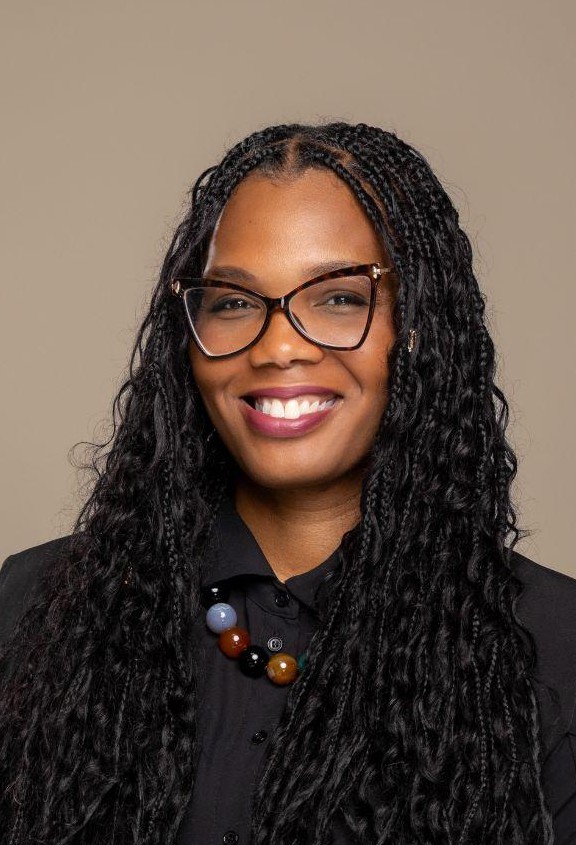 About the Editors:
Keidra Daniels Navaroli, PhD is a curator, museum specialist, and visiting faculty in the School of Visual Arts and Design at the University of Central Florida (UCF). For more than eighteen years, her work in arts management, scholarship, and curation, has focused on questioning cultural divisions, fostering intergenerational dialogue, and enhancing the understanding of traditionally-underrepresented communities of practice. She joined Panorama in 2024 as the inaugural manager of diversity, equity, and inclusion/digital art history. Her current research interests focus on data science, art historical systems, and the history of textiles. She holds a PhD in Texts and Technology from UCF.
 Kaylee P. Alexander, PhD works at the intersection of art history, digital scholarship, and information science. At the University of Utah, she is Research Data Librarian at the J. Willard Marriott Library and Associate Director of Digital Matters, connecting humanities research, data, and technology. Kaylee is the author of A Data-Driven Analysis of Cemeteries and Social Reform in Paris, 1804–1924 (Routledge, 2024) and co-editor of Libraries, Archives and Collective Grief (Bristol University Press, 2026). Her current research examines “data monuments”—commemorative works translating data about loss and atrocity into public remembrance and accountability. She holds a PhD in Art History and Visual Culture from Duke University.
About Panorama:
Panorama is a peer-reviewed, open-access, online publication dedicated to American art and visual culture (broadly defined). Panorama is published twice a year, with past issues archived on the journal website. Our publication—which offers texts of varying lengths authored by leading and emerging thinkers—serves specialists, students at various levels, and lifelong learners. Learn more at https://journalpanorama.org/.
About the Author(s): Panorama is the first born-digital, open-access scholarly journal dedicated to the study of American Art.