

Navigating Archival Silences Through Art





PDF: Hume, Navigating Archival Silences Through Art
When I joined the Newport Historical Society (NHS) in Rhode Island as a summer scholar in 2021, I saw an opportunity to push my nascent career in metadata toward the intersection of memory work and social justice. The institutional description and preservation of historical documents has traditionally been marked by colonialism and racism, creating silences where the stories of marginalized people should be.1 “Voices from the NHS Archives,” a four-year research project, worked to fill these silences. This type of reparative work, alongside a wide range of activism in the cultural heritage field, is what keeps libraries, archives, and museums relevant. I returned to the NHS in 2023 as a research fellow and in the following year became the visiting curator. In partnership with H2 Design Studio, Kaela Bleho and I set out to turn the “Voices” research into a dynamic exhibition that invited the public to explore our findings.
A Name, A Voice, A Life: The Black Newporters of the 17th–19th Centuries was on display at the Richard I. Burnham Resource Center from May to November 2024. Emphasizing themes of personhood and remembrance, it practiced a restorative rereading of the historical record and centered five freed people: Arthur Tikey, Obour Collins, Mereah Brenton, Robert Wainwood, and Hannibal Collins. We recognized that an exhibition of documents would be challenging for visitors to connect with, and we wanted to demonstrate that colonial Newport’s Black history was more than documents, numbers, and footnotes. To extend our text-based narratives and forge deeper connections within the Rhode Island community, we commissioned three Rhode Island–based contemporary artists—Cat Laine, Eric Telfort, and Toby Sisson—to create art that spoke to three of the featured Newporters’ lives and experiences.
Although art has always been a medium for grappling with contentious subjects, the “archival turn” in contemporary art at the start of the twenty-first century signaled a rapidly expanding interest in the concepts of historicity, power, knowledge, and memory.2 Among the many ways artists have engaged with the archive, the concept of the imagined record—those records which are purely speculative or otherwise inaccessible—is key, since it is a powerful tool for beginning to grapple with a wealth of archival silences.3 Laine’s, Telfort’s, and Sisson’s artworks are manifestations of imagined records. Based on the available historical evidence, these pieces actualize possibilities and give us a compelling way of pushing back against the so-called neutrality of archives and museums, which establish whiteness as the norm.
Cat Laine (née Catherine Lainé) focused on Obour Collins, using self-portraiture to imagine the interiority of Collins as a woman most likely stolen from her homeland (fig. 1). Laine played with the notions of memory and home in a nonlinear fashion inspired, at least in part, by Octavia Butler’s Xenogenesis trilogy. Eric Telfort painted Mereah Brenton, endeavoring to embody the spirit of this fifty-year-old woman who witnessed the birth of a nation (fig. 2). Telfort depicted her dignity and standing as a community healer against a turbulent historical backdrop. Toby Sisson created a piece that spoke to Robert Wainwood’s relentless pursuit of freedom (fig. 3). Through abstraction, Sisson relied on color and shape as a means of communicating Wainwood’s journey to emancipation, a path that the historical record reveals was marked by re-enslavement and a protracted legal battle for freedom.
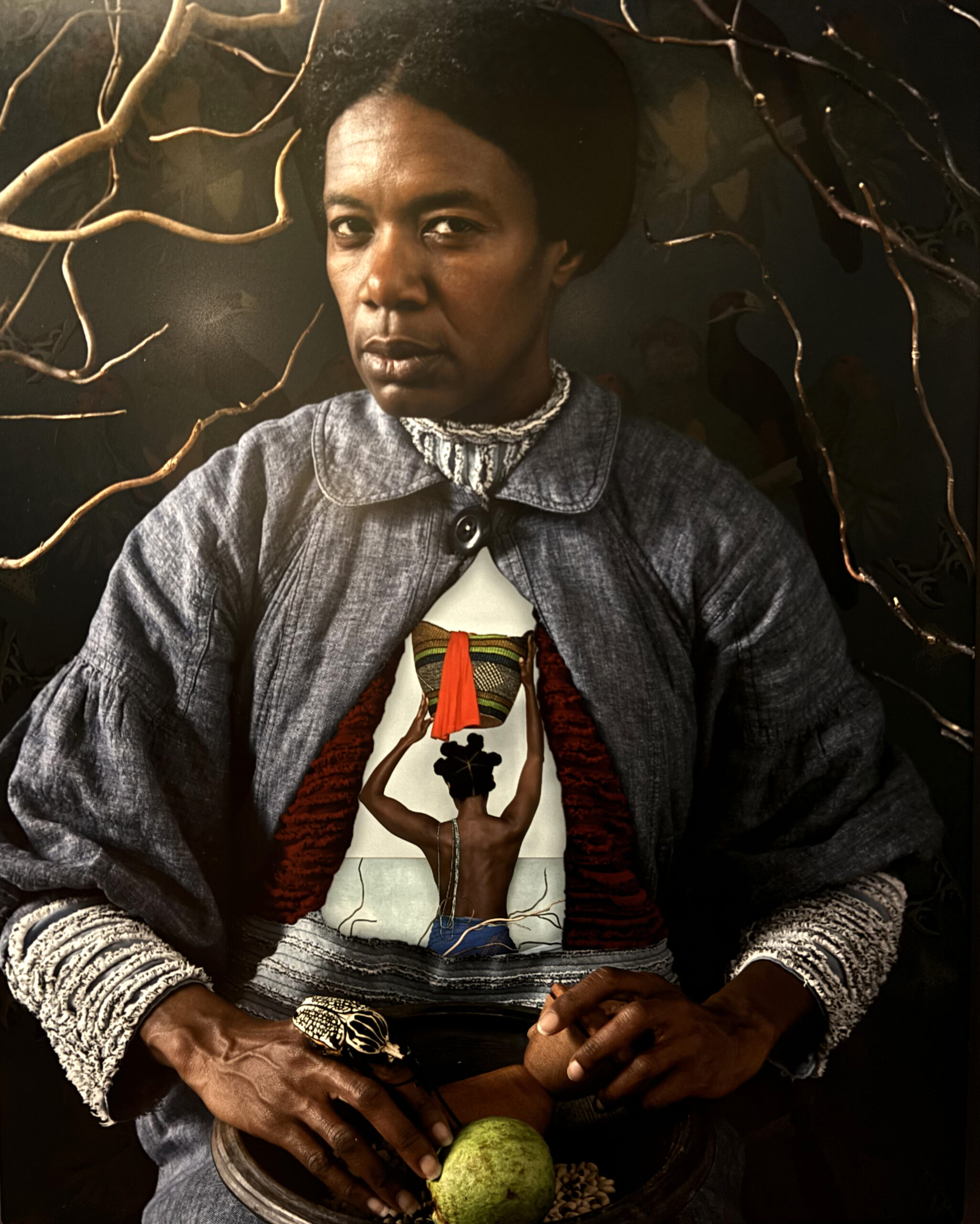
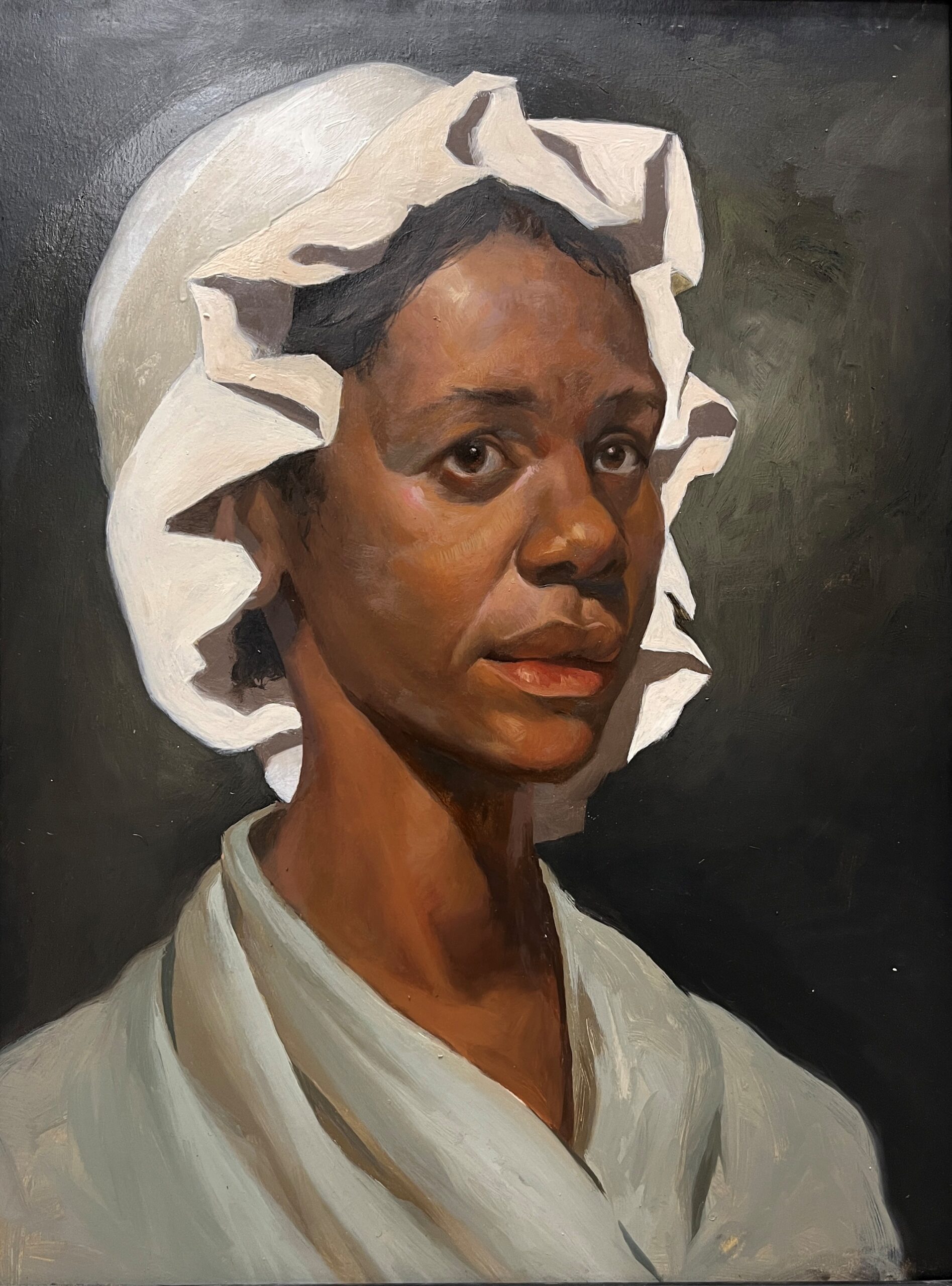
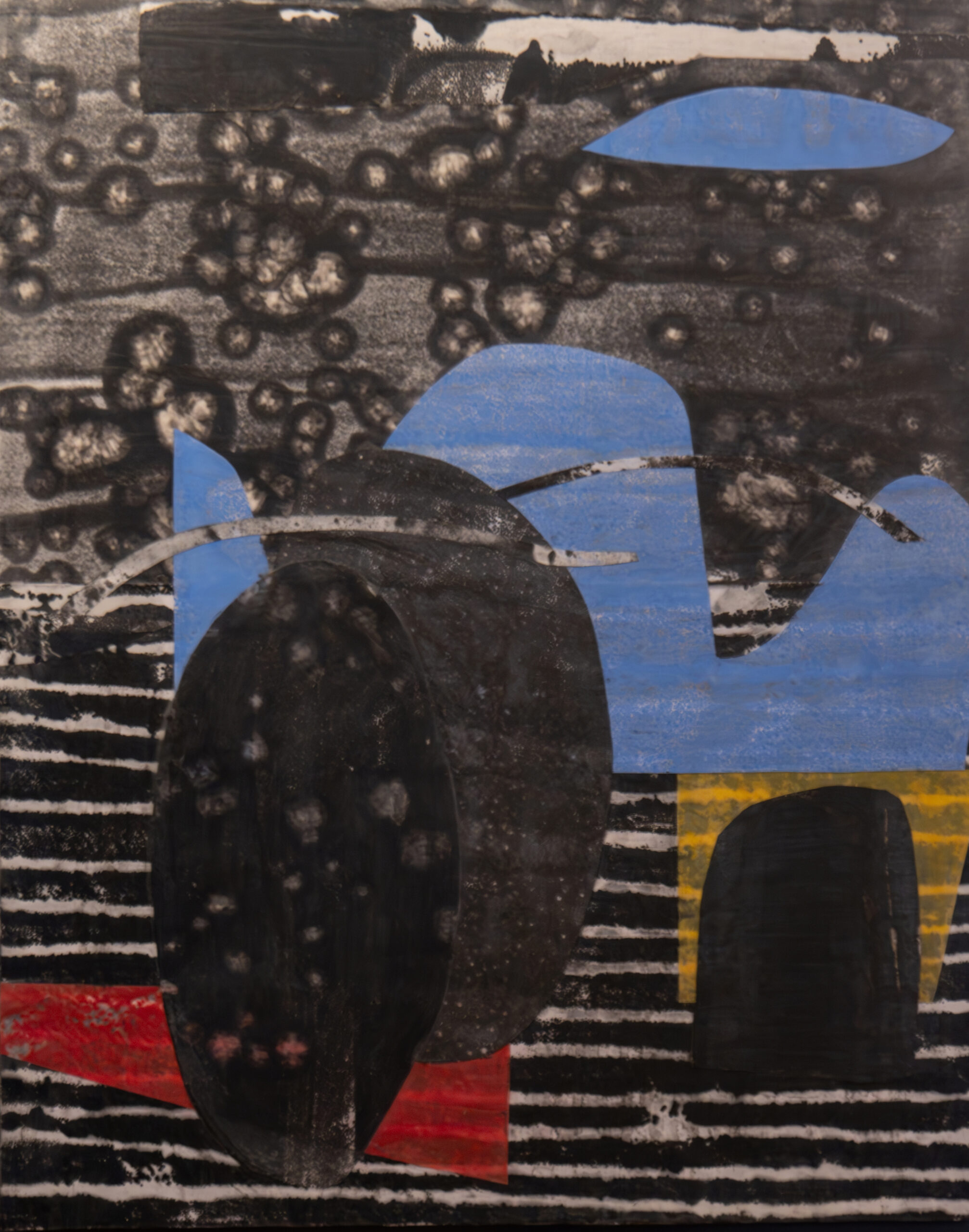
By exhibiting these artistic records alongside historical documents, ranging from vital records in church registers and probate records to manumission records and family papers, A Name, A Voice, A Life blended the actual with the possible. All history is an interpretation of the available evidence, and our interpretations are inevitably shaped by our internal biases, intentionally or otherwise. The artworks and the exhibition as a whole were simultaneously acknowledgments and refusals of archival silence. From the exhibition’s inception, Bleho and I positioned it not as a definitive story but a reflection on what we had learned so far. It was both challenging and liberating to assume the role of authority (as researcher and curator) while openly embracing the unknown. Laine, Telfort, and Sisson had taken on the roles of both artist and historian in the creation of their imagined records, demonstrating that the activation of imagination in the spaces between the available records need not be antithetical to historical fact. In doing so, they helped breathe life back into the spaces where it was once stolen from Black and Indigenous people of color.
Cite this article: Zoe Hume, “Navigating Archival Silences Through Art,” in “Call and Response: DEIA Tensions in Scholarship, Practice, and National Identity,” Colloquium, edited by Keidra Daniels Navaroli and Frederica Simmons, Panorama: Journal of the Association of Historians of American Art 12, no. 1 (Spring 2026), https://doi.org/10.24926/24716839.20929.
Notes
- Bergis Jules, “Confronting Our Failure of Care around the Legacies of Marginalized People in the Archives,” keynote address, National Digital Stewardship Alliance Annual Meeting, Milwaukee, WI, November 9, 2016, https://medium.com/on-archivy/confronting-our-failure-of-care-around-the-legacies-of-marginalized-people-in-the-archives-dc4180397280. ↵
- Sara Callahan, “When the Dust Has Settled: What Was the Archival Turn, and Is It Still Turning?,” Art Journal 83, no. 1 (2024): 88, https://doi.org/10.1080/00043249.2024.2317690; Kathy Carbone, “Archival Art: Memory Practices, Interventions, and Productions,” Curator: The Museum Journal 63, no. 2 (2020): 258, https://doi.org/10.1111/cura.12358. ↵
- Anne J. Gilliland and Michelle Caswell, “Records and Their Imaginaries: Imagining the Impossible, Making Possible the Imagined,” Archival Science 16, no. 1 (2016): 54–55, https://doi.org/10.1007/s10502-015-9259-z. ↵
About the Author(s): Zoe Hume is a doctoral candidate at Florida State University.