

The Revolution Reimagined





PDF: Smith, Revolution Reimagined
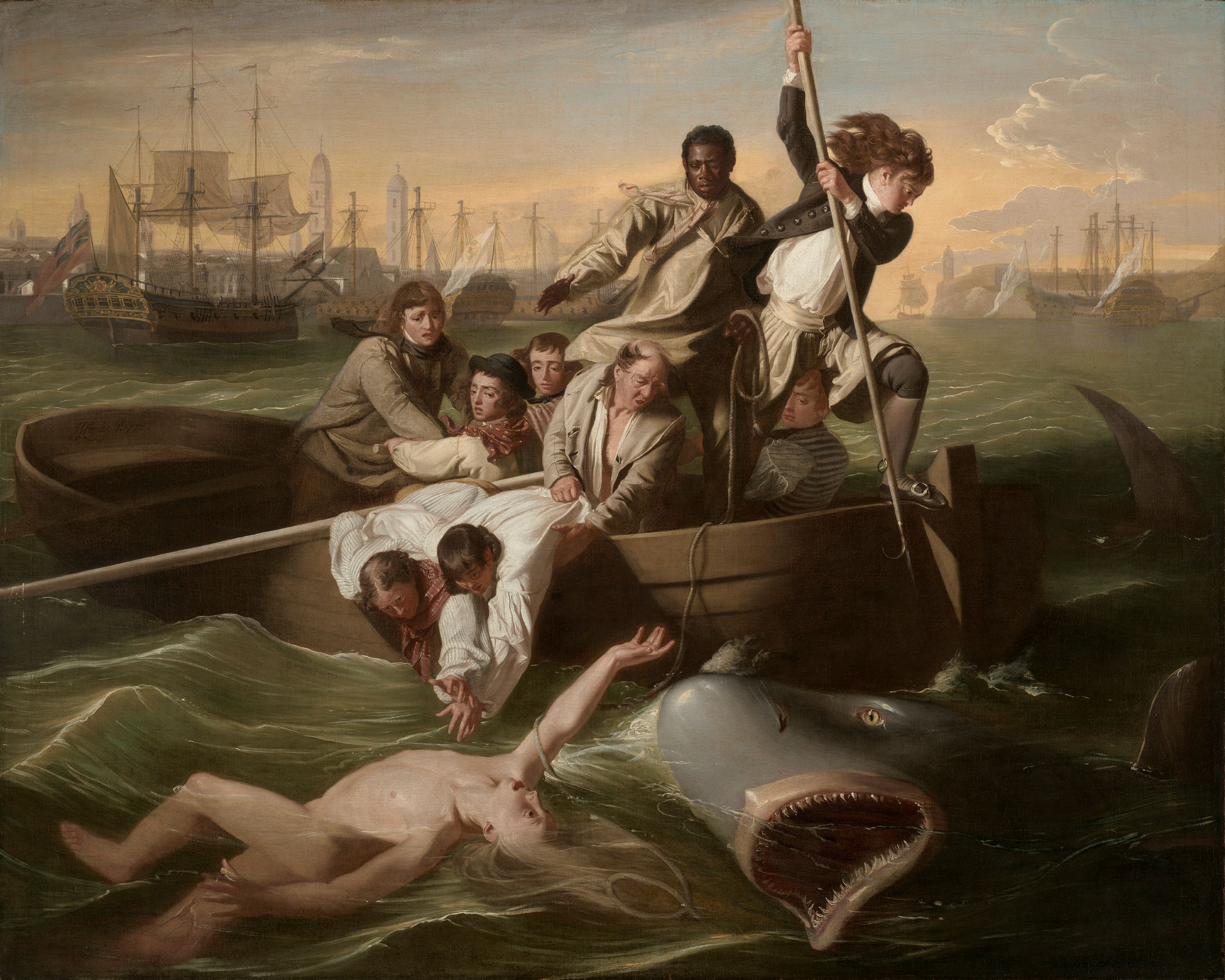
When you visit the Museum of Fine Arts, Boston (MFA), late this summer and enter the galleries for art of the Americas in the eighteenth century, John Singleton Copley’s (1738–1815) iconic Watson and the Shark (1778) will greet you at the door (fig. 1). You have probably met before—either in person or through a reproduction. But now you will be asked to think about the painting in a new context. For our reenvisioned eighteenth-century galleries, which open June 20, 2026, Copley’s scene of rescue serves as a starting point for visualizing the interconnectedness of the Americas. Painted in London by the Boston-born artist, the painting shows a Caribbean waterway that witnessed the movement of enslaved people and commodities from across the Atlantic.
Coinciding with the 250th anniversary of American Independence, the MFA is reinstalling its eighteenth-century galleries for the first time since they opened in 2010. Our new display brings together works in all media from across the Americas—integrating Native and non-Native art from North, South, and Central America and the Caribbean—and exploring how artists have contributed to, or in some cases resisted, ideas of nationhood and identity.
Watson and the Shark beckons visitors into an introductory space, flanked by objects that serve as a table of contents for each of our eight galleries and the diverse narratives that will unfold throughout the reinstallation. A delicately engraved tortoiseshell comb and case made around 1680 in Port Royal, Jamaica (then a British colony), anticipates a broader story about exotic Caribbean materials desired by the colonial elite living in London and Boston. A gleaming silver tea caddy made by Philadelphia silversmith Joseph Richardson Sr., hints at the lustrous drinkware visitors will encounter in a gallery dedicated to the practice and consequences of sipping tea, coffee, mate (a South American herbal tea), and chocolate across the Americas. A bagamaagan (ball-headed club) made for an Ojibwe male warrior anticipates a gallery about art as an instrument of power and resistance, showing how artists challenged the status quo—and continue to do so today. Other galleries focus on homes and family, history and mythmaking, Asian styles in the Americas, communities of makers, and John Singleton Copley. The MFA’s renewed galleries will feature many new and exciting acquisitions, together with familiar favorites, to tell a more complete picture of the eighteenth-century Americas.
Cite this article: Elizabeth Driscoll Smith, “The Revolution Reimagined,” in “In the Galleries,” edited by Elizabeth McGoey and Sara Picard, Panorama: Journal of the Association of Historians of American Art 12, no. 1 (Spring 2026), https://doi.org/10.24926/24716839.21068.
About the Author(s): Elizabeth Driscoll Smith is the Joyce Linde Assistant Curator of Folk and Self-Taught Art at the Museum of Fine Arts, Boston.