

Edmonia Lewis: Said in Stone





PDF: Freeman, review of Edmonia Lewis
Edmonia Lewis: Said in Stone
Edited by Jeffrey Richmond-Moll and Shawnya L. Harris
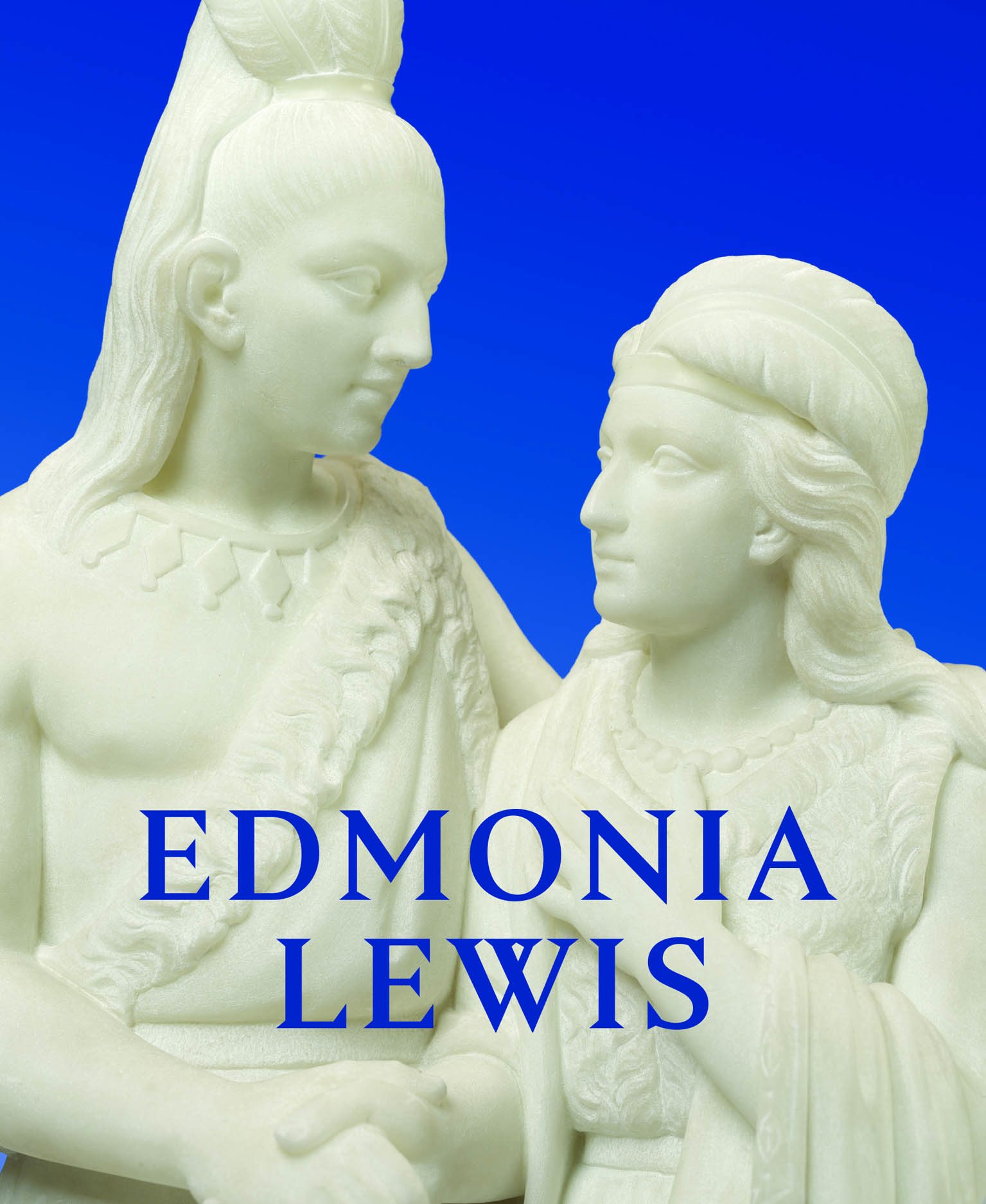 Exh. cat. Peabody Essex Museum and Georgia Museum of Art in association with the University of Chicago Press, 2026. 272 pp.; 175 color illus. Cloth: $60.00 (ISBN: 9780226847245)
Exhibition schedule: Peabody Essex Museum, Salem, MA, February 14–June 7, 2026; Georgia Museum of Art, Athens, GA, August 8, 2026–January 3, 2027; North Carolina Museum of Art, Raleigh, NC, April 3–July 11, 2027
Said in Stone is as much about Edmonia Lewis’s social world as it is about her singularity. The book of collected essays, a companion catalogue to the traveling exhibition of the same name, is an ambitious feat of collaborative research on par with the scope of the show. The first quarter of the twenty-first century has seen numerous reintroductions into the Black and Mississauga sculptor, the most impactful of which is Kirsten Pai Buick’s Child of the Fire: Mary Edmonia Lewis and the Problem of Art History’s Black and Indian Subject (2010), a book frequently referenced by the majority of the catalogue’s contributors.1 The essays included in Said in Stone stretch beyond presenting Lewis, the Black and Indigenous sculptor, as a curiosity and instead reach into the depths of her kinship networks, interiority, and professional artistic practice to present a compelling anthology of what life at the intersection of these worlds would have looked like in the mid-to-late 1800s.
Exhibition curators Jeffrey Richmond-Moll and Shawnya L. Harris lay the groundwork in their titular essay, tracing Lewis’s biographical details in a manner representative of the seven years of research that supported their endeavor. From the catalogue’s first few pages, it is evident that their inquiry into the artist takes a new approach that considers not simply Indigenous but specifically Anishinaabe epistemologies, as well as postbellum Black society in the North that ultimately decenters (without disregarding) the patronage of Lewis’s white abolitionist supporters. The scholarship presented here was facilitated in part by a convening hosted by the Peabody Essex Museum, Salem, Massachusetts, in October 2024, as recounted in the book by participant Karen Kramer, the curator of Native American and Oceanic art and culture. Together, the seven-member advisory team aimed to, in Kramer’s words, “push the boundaries of scholarship on Indigenous North American and Afro-Indigenous histories and advance new conversations in our respective fields,” via the collective re-examination of the artist’s legacy (200).2
The essays paired under the subhead “Indigenous Artistic Worlds,” by Cody Groat (Mohawk) and Joseph Mizhakiiyaasige Zordan (Bad River Ojibwe), provide the reader with scaffolding that appropriately situates Lewis’s racial identity and belonging in its historical context. Groat contextualizes genealogical records that inform the politics of regional migration and tribal enrollment at the time, while Zordan focuses on facets of the souvenir trade market. Together, these essays destabilize the idea that Lewis’s Ojibwe heritage was either a farce or something occasionally emphasized to market herself and her sculptures rather than her authentic life experience. While reporters regularly emphasized the artist’s frequent references to her wigwam-based upbringing, Lewis grew up in a community of art practitioners that was savvy at marketing Native-made commodities. Zordan remarks on the amalgamation of Victorian and Anishinaabe aesthetics that characterized the majority of souvenir items sold within the Niagara Falls tourist market in which Lewis’s maternal aunts participated, and he asserts that Lewis would have possessed a cosmopolitan sensibility at a young age (63). She would go on to carry this awareness of consumer taste in her professional career, as is evidenced in Lisa Blee’s meditation on Lewis’s sculpture Columbus, in which a subservient Native woman crouches before the archetypal standing figure of Christopher Columbus. Blee notes that unlike other works with a similar iconography—Salvatore Revelli’s Columbus and America or Lorenzo Bartolli’s Monument to Christopher Columbus—Lewis’s Native woman is “demure, calm, and self-possessed,” thus embodying a “mutual devotion” between the explorer and Indigenous believer “to Christian progress,” that would have reflected the artist’s strong Catholic faith (116).
A common thread between the catalogue’s essays is the attention paid to the people intimately connected to Lewis. Whereas the support of white benefactors—perhaps most notably the Boston-based abolitionist Lydia Marie Child—has previously been a well-documented dimension of Lewis’s career, we now gain an understanding of the networks of Black financial aid and organizing that also platformed her work. Caitlin Meehye Beech spotlights the women-led work of the Colored Ladies’ Relief Society that sponsored sanitary fairs in the Civil War era, providing aid to Black Union soldiers and their families. Lewis would have encountered this organization—led by its Black and Narragansett president Christiana Carteaux Bannister—while living with her friend Adeleine Turpin Howard, of the prominent Howard family. It was at the 1864 sanitary fair held in Boston’s Mercantile Hall that Lewis displayed her statuette of Sgt. William H. Carney, a member of the all-Black 54th Massachusetts Infantry Regiment. While the statuette itself is lost, curatorial research for the Said in Stone exhibition identified a previously unknown carte de visite depicting the sculpture and giving its title. By providing the name of the soldier, Lewis recognized (as opposed to anonymized) Black labor in pursuit of liberation.
To add further to the investigation of Lewis’s supporters, Melissa Ragain’s chapter, “Chisel and Razor: Tools of Publicity and Belonging in the Lewis Family,” discusses the sculptor’s brother Samuel W. Lewis and the success he found as a barber in Boseman, Montana. Ragain considers the social geographies of the African American Exodusters living and working in frontier regions.3 She demonstrates the steady familial support Edmonia had and the ways in which her notoriety bolstered Samuel’s career. Some biographical details remain obscured. For example, Raigan claims the absence of mentions of Samuel’s Indigenous ancestry is “hardly surprising, given the ongoing resistance by Native forces to colonization” (82). However, this absence is likely because Samuel was not, in fact, Anishinaabe, as he and Edmonia were half siblings who only shared their West Indian father. Important additional material from people close to Lewis at another point in her life is provided by Gloria Bell in her chapter “‘In the City of the Caesars’”: Sculpting Indigeneity in Rome,” which discusses the letters of fellow sculptor Florence Freeman that were gifted to the Boston Athenaeum in 2022. These letters provide significant insight into the quotidian life of Lewis during her Rome years, documenting her relationships in the absence of any surviving personal journals.
But as the contributors show, this absence of the sculptor’s archive does not equate to a lack of self-authored materials. Melissa M. B. Flowers’s chapter, “‘How Edmonia Lewis Became an Artist’: Print Culture and Public Persona,” is a bibliographic study based on a pamphlet Lewis herself published between 1868 and 1870. The essay reflects Lewis’s interdisciplinary approach. In centering the textual to examine the politics of Black and Indigenous publishing in the wake of abolition, Flowers reads Lewis’s invocation of common racialized literary tropes and her use of self-descriptive language, such as “Indian girl,” as a concession made between the public and her own understanding of herself (122).4 One of the most impressive features of the catalogue is a facsimile of Lewis’s pamphlet, appearing after a close-up image of the signature on one of the numerous versions of Hiawatha’s Marriage that reads “EDMONIA LEWIS ROMA 1870.” These thematic concentrations on self-fashioning, mythology, and authorship are also echoed in the contributions of Makeda Best on the photographic technology of the carte de visite and a coauthored technical study by Amy Jones Abbe and Richmond-Moll.
One of the most significant interventions of book Edmonia Lewis: Said in Stone is its correction of the long-held idea that Lewis is a forgotten figure in need of resurrection. To the contrary, cocurator Harris reminds us that her oeuvre was known to generations of Black American artists and scholars, beginning in her lifetime with recognition in the form of the “Edmonia Social Club” held by the African Methodist Episcopal (A.M.E.) Zion Church in New Lisbon, Ohio, and continuing to her inclusion in the first-of-its-kind survey text Modern Negro Art by James Amos Porter, published in 1943. Similarly, Groat discusses the significance of the genealogical groundwork conducted by Romare Bearden and Harry Henderson in their 1993 A History of African American Artists (50). Lewis’s perpetual “struggle between permanence and obsolescence” in art-historical scholarship and cultural consciousness at large, then, is not a feature of her memorialization but symptomatic of privileging a settler colonial institutional memory (185). Taking this stewardship-oriented approach, the volume with its eighteen diverse essays resists framing Lewis as a symbol of racial curiosity and instead centers the personhood.
Cite this article: Morgan Ellen Freeman, review of Edmonia Lewis: Said in Stone, edited by Jeffrey Richmond-Moll and Shawnya L. Harris, Panorama: Journal of the Association of Historians of American Art 12, no. 2 (Fall 2026), https://doi.org/10.24926/24716839.21614.
Notes
- See Penelope Green, “Overlooked No More: Sculpture of Worldwide Acclaim,” New York Times, July 25, 2018, https://www.nytimes.com/2018/07/25/obituaries/overlooked-edmonia-lewis-sculptor.html. The New York Times series “Overlooked” publishes retroactive obituaries that the paper failed to cover at the time of the subject’s death. Its coverage of Edmonia Lewis in 2018, which includes comments from Buick, came at a time of renewed interest in the artist’s career in the twenty-first century. She was among the first recognized in the series. ↵
- The attendees were Kate Dalton (Mississaugas of the Credit First Nation, Woodland Cultural Centre), Philip J. Deloria (Dakota descent, Harvard University), Bonnie Devine (Member of Serpent River First Nation, Ontario College of Art and Design University), Heather George (Kanien’kehá:ka descent, Woodland Cultural Centre), Cody Groat (Kanyen’kehaka {Mohawk} and band member of Six Nations of the Grand River, Western University), Leslie King Hammond (Maryland Institute College of Art), and Tiya Miles (Harvard University). ↵
- Dr. Melissa Raigan curated the exhibition Chisel & Razor, Act I: The Artistic Legacies of Edmonia and Samuel Lewis, on view at Tinworks Art in Bozeman, Montana, from June 19–October 25, 2026. Act II will be on view October 3, 2026–April 4, 2027. The term “Exodusters” refers to the tens of thousands of Black Americans who migrated westward following Reconstruction, preceding the more widely recognized Great Migration. For more on this movement, see Nell Irvin Painter, Exodusters: Black Migration to Kansas after Reconstruction (Alfred A. Knopf, 1976). ↵
- The pamphlet How Edmonia Lewis Became an Artist contains the line: “Her brother, who was at a school for Indian boys at the time of his mother’s death, soon finished his studies and went to California, where he was able in a few years to send money to his little orphan sister, that she might be sent to school,” which further muddies the details of Samuel’s ancestry. ↵
About the Author(s): Morgan Ellen Freeman is a doctoral candidate in the Department of American Studies at Yale University.