

Religion in Plain View: Public Aesthetics of American Display





PDF: Munson, review of Religion in Plain Sight
Religion in Plain View: Public Aesthetics of American Display
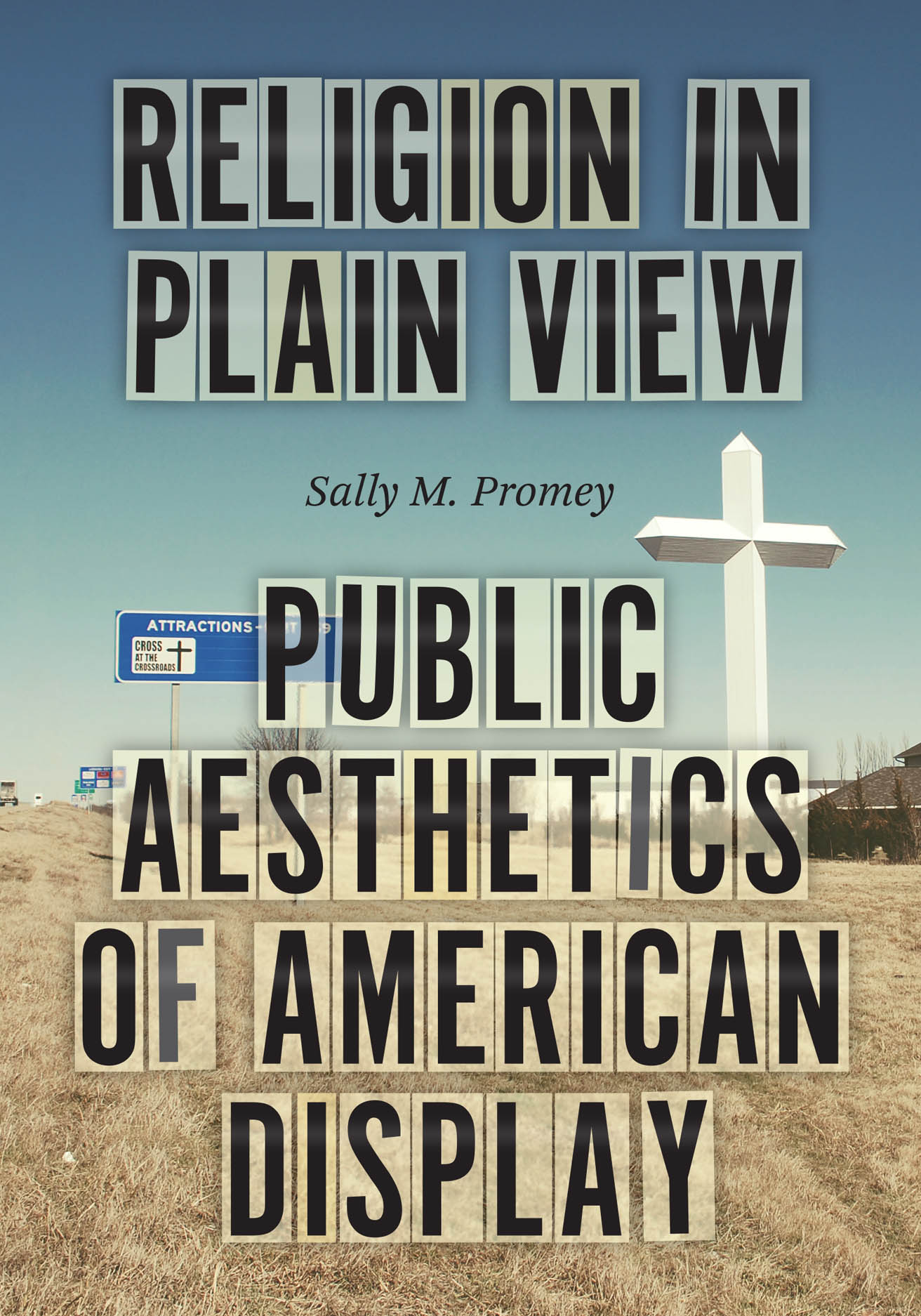 by Sally M. Promey
University of Chicago Press, 2024. 560 pp.; 133 color illus. Cloth: $40.00 (ISBN: 9780226832333)
“Honk if you love Jesus!” Public displays of faith and religious sentiment, whether on bumper stickers, store windows, T-shirts, or billboards, are commonplace in the United States of America. We love to project our identities, even our metaphysical ones, in short, digestible installments for public consumption. One of my favorite memes from recent years is something like: “When I buy my Subaru, does it come with its ‘Coexist’ sticker already installed, or do I need to add it myself?” Americans of all stripes enjoy proclaiming personal beliefs on their material objects: We are a testimonial folk. Sally Promey’s new book, Religion in Plain View: Public Aesthetics of American Display, argues that this impulse of presentation is more than just identity crafting; rather, it is deeply ingrained in American psyches and structures our lived experience. Public display of religion shapes our cultural productions, the appearance of our cities, and the biases of our legal systems. Do Americans’ material manifestations of religious belief speak to any kind of shared national values, or are they markers of privilege and exclusion? Religion in Plain View emerges at a time when “traditional” American cultural and religious identities seem to be in flux, if not in existential crisis. Who has a right to say who and what the United States is? Is it truly a Christian nation, as so many have argued, especially in recent years? Accordingly, this book attempts to understand the visual and material assertions of religious belief—what Promey calls “display”—across time and place in the United States. Her aim is to emphasize the function of such communication and to address its consequences on our cultural fabric.
More than four hundred pages of dense ideological and theoretical writing, Religion in Plain View is an ambitious and hefty tome, in every sense. In a culture where religion and spirituality are often used interchangeably, conceptual guardrails and linguistic precision matter for this topic. Necessarily, the author painstakingly leads the reader through her argument by establishing a series of terms that run through the text, fleshing out and clarifying her position. Her terminology ranges from uniquely Promeyan to constitutional legalese: landshape, testimonial aesthetics, conversational assemblies, heritage fabrication, material establishment. Importantly, none of these terms are neutral, and in Promey’s framework, all take on a suggestion of malintent (hence my use of the word “ideological” above). The result is an all-encompassing attitude of territorialism in religious display in the United States. To Promey, this mentality is germane to one American group in particular: Throughout the book, she emphasizes the ways in which White Protestants have claimed material and visual prominence in the United States and, in doing so, have tightened control over almost all other mechanisms of power.
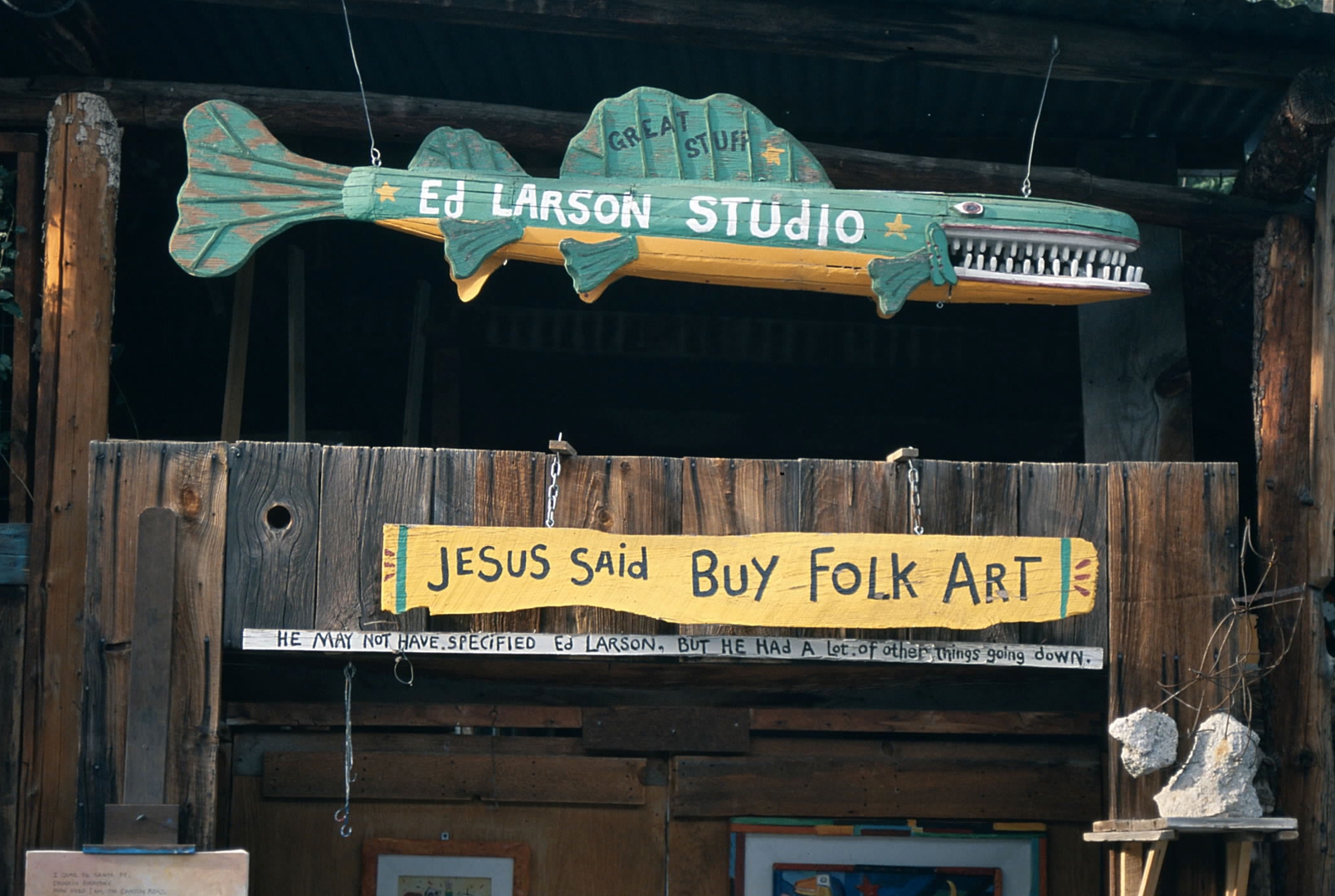
Indeed, there are cultural conditions in the United States that are markedly different from elsewhere in the modern world. Perhaps nowhere else do the twin emphases of religion and capitalism loom as large in the public consciousness. This is Promey’s point: Religion and capitalism have so deeply influenced each other in the United States that it is impossible to fully extricate one from the other, with startling ramifications. The testimonial drive of “This worked for me, you should try it, too” is central to the ethos of both, leading to what Promey calls “testimonial aesthetics.” Salesmanship is such a part of American culture that most of us are accustomed to its omnipresence, and thanks to technology and social media, we are subject to increasingly targeted visual encroachment in even the most private aspects of our lives. We have long been aware of the spectacular nature of capitalist culture and its effects (Here’s to you, Guy Debord!), but what we may not have deeply considered is the spectacular nature of religion in the United States. Enter Sally Promey.
Debord’s Society of the Spectacle (1967) states that in capitalist culture, appearance gradually replaces authenticity; appearing to have (whether an object or experience) is more important than actually having. While incredibly prescient (how did he predict the rise of social media influencers sixty years ago?), spectacle in the practice of religion inverts this paradigm. As Promey notes, authentic religious experience often leads to a public acknowledgement, or “testimonial,” particularly in Protestant Christianity and especially in its most dogmatic evangelical sectors. In other words, appearance bolsters authenticity in many practitioners’ perceptions. This leads to a crucial point: As manifestations of “testimonial aesthetics,” public artworks, religious performances, sites of worship, and other visual symbols are commonplace in what feels like the essential culture of the United States. Promey corroborates this claim with the preponderance of crosses and Christian fish on display across the country, often alongside American flags or other patriotic imagery. She claims such displays emphasize the outsized presence of Protestant Christianity not only in the visual history of the United States but also as integrally formative to the country’s proclaimed identity; display reinforces hegemony.
While the book has too many case studies to enumerate here (billboards, murals, buildings, roadside attractions, and sacred sites, to name a few), a broad overview might suffice before addressing some specific arguments. Structurally, the book moves from the broad to the specific. The wide-angle lens of the first chapter lays out a “conversational aesthetics,” studying how objects’ meanings both affect and are affected by their surroundings. How we see and what we see (and by extension, what we do not see) in the landscape speaks to projected cultural values. The second chapter describes the testimonial nature of display and its enmeshment with consumer culture. The following two chapters build on discussions of hegemonic geographical construction and describe how heritage is fabricated in the United States, conflating and reinforcing Anglo-Protestant dominance through the machinations of both cultural and legal systems. The fifth chapter delves into a specific case study of the current dispute regarding construction on the sacred site of Mauna Kea in Hawai’i. The book concludes by addressing the limitations of display and considering some ways in which the United States might manifest new ways of being in the future.
Although not mentioned directly, the theories of two earlier philosophers saturate Promey’s argument. The first, Pragmatist William James, is relevant for his emphasis on context in any interpretation of language. Promey’s consideration of how meaning is conditional, transitional, and experiential coincides neatly with a Pragmatist understanding of how words and images are not static but instead are highly contextual symbols that “work” within private and public experience. Put simply, visual or material displays can never have one interpretation, nor do intended readings necessarily stick: Layers of meaning accrue through interactions with a specific place over time. Second, Promey’s project echoes the sociological arguments of Benedict Anderson’s Imagined Communities: Both argue that fostering a sense of national cohesion is predicated on the construction of a shared imagined identity, even if (or because) doing so leads to the exploitation and/or suppression of others. For Promey, this is the gist: There is a clear bias toward White Protestant Christianity baked into not just US cultural identity but also into our systems (educational, legal, and political), perpetuated by display.
“Conversational assemblies,” to use Promey’s nomenclature, are objects, signs, or symbols that interact with their environments. One of her most effective illustrations, a mural in San Francisco’s Chinatown, exemplifies this situational display (69). Located on the exterior wall of a bookstore at the intersection of Grant and Washington Streets, the American flag mural is simple and visually arresting. Emblazoned with the words “God Bless America,” the mural was created as a memorial to 9/11 and was dedicated three years later, on September 11, 2004. One does not have to think long to understand why an immigrant neighborhood would want to advertise its patriotism, particularly in the xenophobic period after 9/11. The public has consistently directly engaged with the mural over the last two decades. Upon close inspection, layers of paint reveal years of graffiti tags, ethnic slurs, erasures, and continual careful repainting. While some might consider the mural an anodyne patriotic expression, to say that it has sparked incendiary reactions from the public is an understatement. Importantly, much of the “conversation” centers on religion: A potent 2008 photo shows the overpainting of the B to cause the image to read “God less America,” which was then repainted only to have someone else scrawl “Jesus was a fuckin’ liar” on one of the white stripes (74). This was painted over, too. The patches of color and multiple textual overlays have caused this painting to become a large-scale iteration of a Jasper Johns flag. Though Promey does not refer to Johns in her text, it is an apt association: Just as Johns used the symbol of the flag because it was something that is “seen but not looked at, not examined” in an era of political fears and cultural othering, this flag (and its layers of discontents and restorations) becomes a powerful symbol of the American immigrant experience.1 Promey also does not mention a 1924 plaque that marks another Chinatown building just a stone’s throw away from the mural, commemorating the first raising of the American flag in San Francisco by Commander John B. Montgomery on July 9, 1846. The symbolism of the flag and its appearance here throughout the last two centuries speak to a history of place and displacement while highlighting a shared identity. Significantly, it was a group of local shop owners (all immigrants) who proudly painted the flag mural and continue to restore it and the accompanying text to this day. In this way, display has a unique ability to celebrate and critique religious, political, and cultural identities in a specific place over time. If we only look, cities are palimpsests of meaning.
Religion in Plain View highlights inequities and prejudices deeply entrenched in the American imaginary. There is no singular American mind, yet for so long our visual and material culture has operated under the assumption of a shared system of religious and political beliefs. Promey argues that White Protestant Americans (whether consciously or not) perpetuate cultural dominance through the quotidian display on vehicles, billboards, and buildings and even in the ways the very land has been shaped. To borrow from John Stuart Mill, “So true is that unnatural generally means only uncustomary, and that everything which is usual appears natural.”2 In other words, we are used to seeing certain forms of cultural expression (for Promey, symbols associated with White Protestantism) because we have seen them for so long; they become normalized through their ubiquity. Consequently, other forms of cultural expression (non-Protestant or non-White) become much harder to incorporate into the American imaginary in the United States. Thus, national identity is reduced to a single narrative that takes on the guise of heritage. We have seen the effects of this in recent years, especially with the intensification of Christian Nationalism and religious or race-based violence, leading to increasing polarization and othering. Although this book does not analyze the digital sphere as part of the “public,” heritage fabrication and identity politicking have been exponentially intensified through “display” on social media and the like.
This concept of heritage anchors Promey’s thesis. She writes, “‘American heritage,’ as taught in public schools and represented on the ground, is a fabrication that rests on a long history of fabrications, denials, eradications, and violent displacements of people and traditions” (249). As she argues in chapter 4, heritage is not real but has been manufactured in order to be weaponized and therefore is always perverse: “Heritage is neither history nor ancestry nor tradition but a tightly tethered instrumentalization of each” (251). And moreover, heritage has absolutely been used to catastrophic effect. One of her most compelling chapters discusses the deployment of a “history and tradition test” (read: heritage test) in recent Supreme Court cases regarding the material establishment clause (chap. 4). Should a six-foot-high sculpture of the Ten Commandments really occupy land on the grounds of the Texas Capitol? The Supreme Court decided it should in 2005, with William Rehnquist applying said “test” in his opinion. Should a massive telescope be built on the sacred Mauna Kea summit in Hawai’i? Apparently, this site is not constitutionally protected, despite protests of Indigenous Hawaiians. Promey writes: “Important for a book on religion in plain view, the US judiciary invests heritage, a cultural form of ‘precedent,’ with considerable energy and weight, especially with respect to First Amendment cases concerning display” (249). In most of these instances, heritage (as implemented by conservative justices) is more liquid than solid, filling whatever ideological container is needed for the desired outcome. Clearly subjective and ill-adapted to the strict demands of legal decisions, the heritage test has led to rulings that are clearly partial to certain groups over others. This is where Promey’s book shines: By privileging a specific type of institutional religion as American heritage, what seems like benign religious preference actually serves to systematically exclude or other those “outside the fold.”
I find other aspects of this heritage conversation slippery, however. Is all heritage inherently hegemonic in intent, as Promey argues? In the postmodern era, most scholars agree that all histories are incomplete. History depends on the narrator, of course, and is therefore difficult to characterize as unequivocally objective. We humans are storytellers, and more often than not, we are our own favorite subjects. In an era in which individual identity is elevated to sacrality (“Speak your truth!”), how is an individual’s cultivation of identity that different from a group’s cultivation of identity? From the sheer prominence of filtered, carefully cropped, idealized selfies flooding social media, it is fairly clear that most people do not wish to display their flaws first. I would argue that heritage operates in the same fashion. Heritage is culture craft, identity craft, and community craft, which in themselves are not evil; only when heritage becomes an implement of suppression does it become so. Hierarchies, hegemonies, power structures—these are human tendencies, but they are not necessarily inevitable. Yes, heritage is fabrication, but with nuance perhaps we can see it as a fabrication that is not crystalized but malleable and open for inclusion.
While we are due for some national introspection, I do think some of the central components of Promey’s overall argument need nuance. My main critique rests on her simplistic conflation of White Anglo-Protestants into a single menacing group:
Anglo-Protestant Christianity rewrote, reinvented, and manifestly materialized American history and American heritage to bolster its own fundamentally racist sovereignty claims and its investments in building a nation in its own image—literally over the bodies and on the backs of human beings it identified as (often less than fully human) “others” (29).
Yikes. The history of the United States is indeed rife with acts of bigotry and hatred. Many White Protestants have deftly weaponized their biases to great effect, but that is not a characteristic owned only by this group. Moreover, many American Protestants throughout history have found such actions and beliefs reprehensible. It bears noting that the Puritans founded their early colonies as sites of religious tolerance, and from the outset, people fought about what tolerance should mean, even just for the English. Let us momentarily set aside valid arguments about religious practices of Indigenous people, women (and men) labeled as witches, or even colonial Catholics. What about Anne Hutchinson? Roger Williams? Protestants have always been a varied group, and even in the seventeenth century, there was a spectrum of belief in practice. Promey’s discussions of racism during the Civil Rights Era or Hawaiian subjugation would be strengthened by an acknowledgement of the many White Protestants who have acted in good faith on the side of the oppressed; otherwise, she risks appearing to construct a stereotypical Protestant straw man for her very real argument. Such actors may have been in the minority, but villainizing all members of a group does little to help those marginalized and may actually cause more harm in the process. Almost every system of belief (including atheism) contains ideological conservatives and progressives simultaneously, and all around the world there are systems of intolerance and oppression. Asserting dominance at the expense of others is not merely a Protestant sin; it is a human one.
Many of the historic case studies of Promey’s book speak to exclusionary modalities that were the geopolitical and/or cultural norms of their eras. Expecting an early nineteenth-century missionary or a seventeenth-century Puritan founder of New Haven, Connecticut, to have the same sense of what “religious tolerance” means as a twenty-first-century reader is anachronistic. For example, she condemns signage in the Mariposa Grove Museum dedicated to the Sierra redwoods that dates a massive fallen redwood’s tree rings with the birth of Christ, the Crusades, the Magna Carta, and the Declaration of Independence; the sign claims these events as “our history.” To say that the early twentieth-century rangers who created the educational materials for teaching the age of the felled redwoods might have included Indigenous histories a century ago is ultimately improbable. We are all creatures of our own times. In this case, what we can do now is create new teaching materials and signage for national park visitors that are historically inclusive. There is no reason why we could not have the birth of Jesus (year zero by most international calendars) and the Declaration of Independence marked on tree rings alongside important Indigenous historical events, even acknowledging incidents of violence against the Indigenous people at the hands of White settlers. What better way is there to teach each other about concurrent histories and to learn from them?
Finally, what Promey flatly rejects I do not find so easy to ignore: the quality of sincerity. She pointedly states that sincerity is impossible to quantify, which is true. However, to intentionally and entirely disqualify it from consideration does not just leave an aspect of religion unexplored, but it renders the practitioners disingenuous, leading to false narratives. I am emphatically not saying that sincerity should excuse actions of bigotry and violence. What I am saying is that sincerity matters—and not only to understand history more clearly. While certain forms of religious expression may seem out of step or downright distasteful to twenty-first-century readers, a nuanced perception of religious motivations not only serves to explain historical actions more fully, but it also humanizes the people involved. Demonizing (even historical) others only shifts the “us vs them” dialectic to new groups. Understanding how historical prejudices led to systemic injustice is necessary work, because it forces us to consider how our own biases that might come from earnestly held values could do likewise.
Promey’s book is indeed a critical read and enlightening if provocative. The book clearly demonstrates the history of religious and racial privilege that continues to operate in the United States today. We must do better. I would ask, however, what the cost of ejecting all notions of heritage might do to our sense of nationhood? Is there a way in which display can work less hegemonically? Finally, is it possible to make our institutions and systems work for all? At the risk of using a Protestant-tinged expression (or sounding like a naive optimist), I would argue that, first and foremost, envisioning any kind of cohesion is only possible if Americans extend more grace to one another. By that, I mean the constant othering and villainizing of our fellow citizens has led us here. Empathy, or believing in our “better angels,” to borrow a term from a past Protestant, is idealistic but necessary work. In the summer of the United States’ 250th year, it is time to craft a narrative (dare I say fabricate a heritage?) that can acknowledge and hope to transcend our past wrongs to imagine an inclusive, more perfect union. I’d like to put that on a bumper sticker.
Cite this article: Meredith Massar Munson, review of Religion in Plain View: Public Aesthetics of American Display by Sally M. Promey, Panorama: Journal of the Association of Historians of American Art 12, no. 2 (Fall 2026), https://doi.org/10.24926/24716839.21603.
Notes
About the Author(s): Meredith Massar Munson is the assistant professor of modern and contemporary art History at Baylor University in Waco, Texas.