

New Archival Evidence on Robert Duncanson from Two Lawsuits: “Taylor vs. Taylor” (1859) and “Succession of Milton Taylor” (1872, 1876)





PDF: Gregory and DeBow, New Archival Evidence
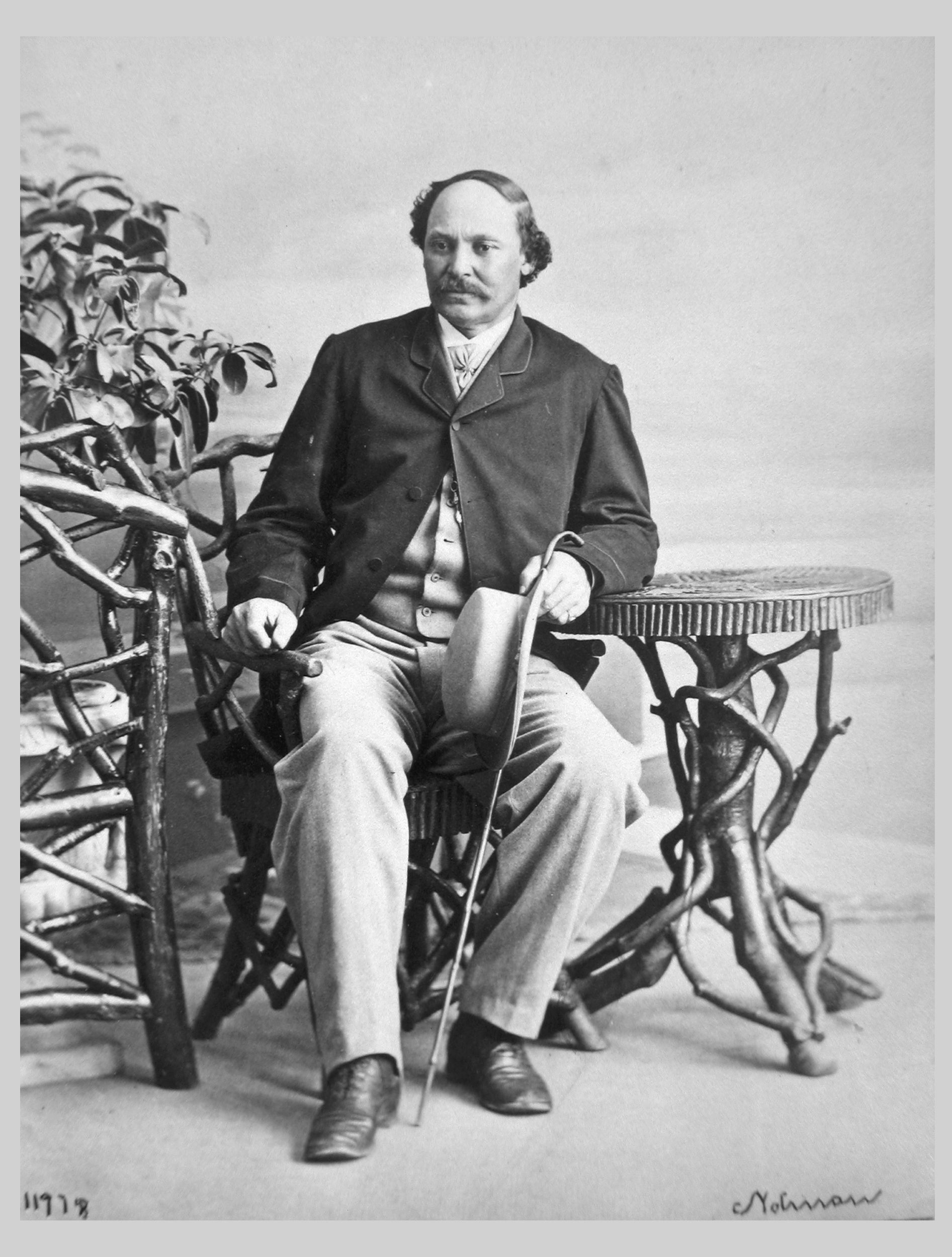
The discovery of two nineteenth-century lawsuits has yielded substantial new archival information relating to the landscape painter Robert Seldon Duncanson (c. 1821–1872) (fig. 1). Both lawsuits are related to the artist’s father-in-law from his second marriage: a Kentucky enslaver named Milton Taylor (1794–1869).
Through these two cases, we learn that Duncanson was both personally and professionally connected with Cincinnati’s best-known white abolitionist, Levi Coffin (1798–1877). Coffin was known as the “president of the Underground Railroad.”1 This connection between Coffin and Duncanson solidifies the artist’s relationship with Cincinnati abolitionists and expands our understanding of his local community.2
These cases shed light on Duncanson’s family life, which has, until this point, been almost entirely unknown. In more than seven hundred pages of transcripts, there are intimate details about Duncanson’s wife, her family, his relationships in and out of the family, his children, his travels, and his connections to famous abolitionists. The only previously known source that touches on Duncanson’s familial relationships is a contentious letter dated June 29, 1871, that he wrote to his son from his first marriage, Reuben (1844–1875), sharply rebuking his son’s accusation that he was content to pass for white.3
These discoveries about Duncanson’s abolitionist ties and his family life come at a crucial time. The Black landscape painter has experienced a resurgence of both popular and scholarly interest over the past three decades, especially after Dr. Jill Biden chose Landscape with Rainbow (1859) to be President Biden’s inauguration painting in 2021. Several museums are also planning major exhibitions of Duncanson’s works in the next three years. While scholars are increasingly writing about Duncanson’s work, many questions have remained unanswered about the artist’s life, his family history, and his involvement in the abolitionist movement or the presence of encoded antislavery messages in his paintings.4
Duncanson collaborated with daguerreotypist J. P. Ball on his massive work Antislavery Panorama and gave two of his major paintings to abolitionists (Ellen’s Isle to Senator Charles Sumner and Garden of Eden to the Reverend Charles Avery). Our archival discoveries strengthen Theresa Leininger-Miller’s argument that Duncanson’s recently discovered View of Carthage has strong abolitionist undertones and can be connected with the Colored Conventions being held nearby.5 The artist also painted numerous portraits of Cincinnati abolitionists, which Naurice Frank Woods Jr. details in depth. The court cases discussed here bolster Woods’s argument that these relationships were essential to Duncanson’s success and that he retained lifelong connections with his patrons.6
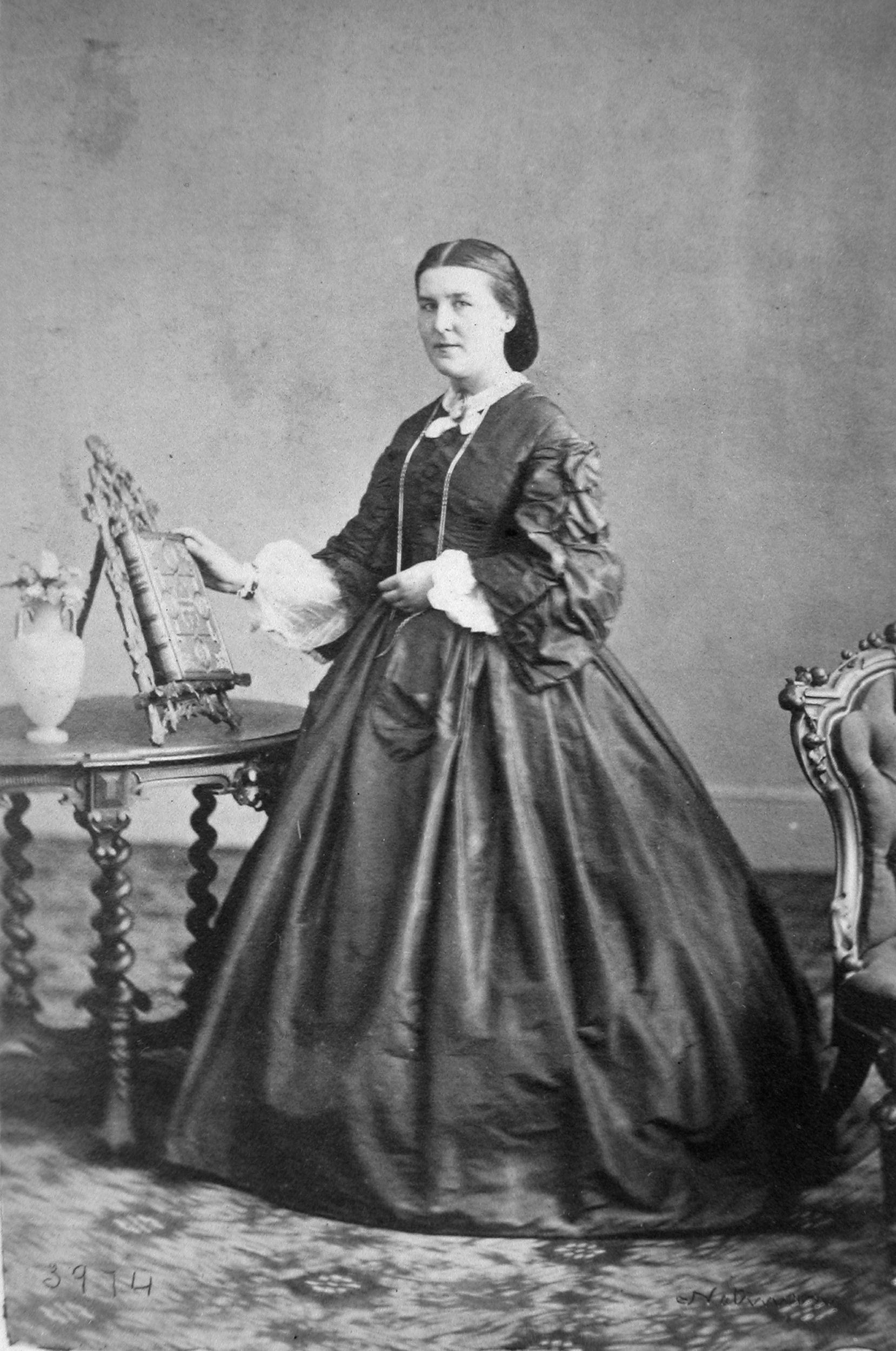
In the first case, which began in Kentucky in 1858, a woman named Catharine Amelia Shay petitioned to receive alimony from Milton Taylor, her estranged partner, although the two were never legally married. Shay was seeking support for herself and their two young boys, who were half-siblings of Duncanson’s second wife, Phoebe Ann Taylor Duncanson (1835–1905) (fig. 2).7 The second lawsuit reached the Louisiana Supreme Court in 1872 and was filed by Phoebe and her brother, John James Taylor (1829–1900). They were seeking a portion of their late father’s estate, which had been awarded exclusively to their youngest sister, Mary Ann Jane Rogers (b. 1842).8
This essay presents a brief summary of these two voluminous, multiyear cases. The excerpts from these court transcripts provide an intimate view into Duncanson’s life, his family relationships, and the Midwest abolitionist movement in the mid-nineteenth century.
“Taylor vs. Taylor” (1859)
In 1858, Duncanson first appears in records of his father-in-law’s legal troubles. Shay (going by Catharine Taylor) filed a petition to receive alimony from Taylor after the dissolution of their relationship. Shay was a white woman with Irish heritage whom Taylor had met in New Orleans. On October 24, 1857, Taylor posted a notice stating: “All persons are hereby cautioned and forewarned from trusting Catharine Amelia Shay, Alias Mrs. Catharine Lilly, assuming to be my wife, but who is not, on my account.”9
While the case was being litigated, Taylor took his and Shay’s two young boys, Milton Jr. (five years old) and William Henry Taylor (two years, ten months old) to Cincinnati without Shay’s permission. Taylor justified this decision by saying that Shay was abusing the children and planning to take them to Buffalo, New York, where Taylor could not protect them from their mother’s mistreatment.
Once in Cincinnati, Taylor asked Coffin to send the boys to be boarded and educated with abolitionist Quakers in Indiana. Coffin previously sent John James, Phoebe, and Mary Jane to live or work with Indiana Quakers.10 However, Coffin offered instead to place the boys with Martha Ann and Ransleur Johnson, two formerly enslaved people whom Coffin had helped escape from Louisiana. Coffin describes Johnson as his “agent,” implying that Johnson may have been involved in assisting self-emancipating people who were heading North. Duncanson and Phoebe (the two were not yet married) escorted the children to the Johnson household. There is an extraordinary irony in this: an enslaver working with a known leader of the Underground Railroad to help shelter his white children by placing them with a formerly enslaved couple.
However, the case took a tragic turn: Milton Jr. and William Henry died suddenly about a week after their arrival in Ohio. According to an autopsy conducted on June 9, 1858, both boys died from encephalomalacia or “softening of the brain,” which can be caused by severe head trauma. Witnesses who testified in this suit claimed these deaths were the result of abuse by their mother.11 The boys died while exhibiting spasmodic convulsions for over six hours; Duncanson was present for William Henry’s death.
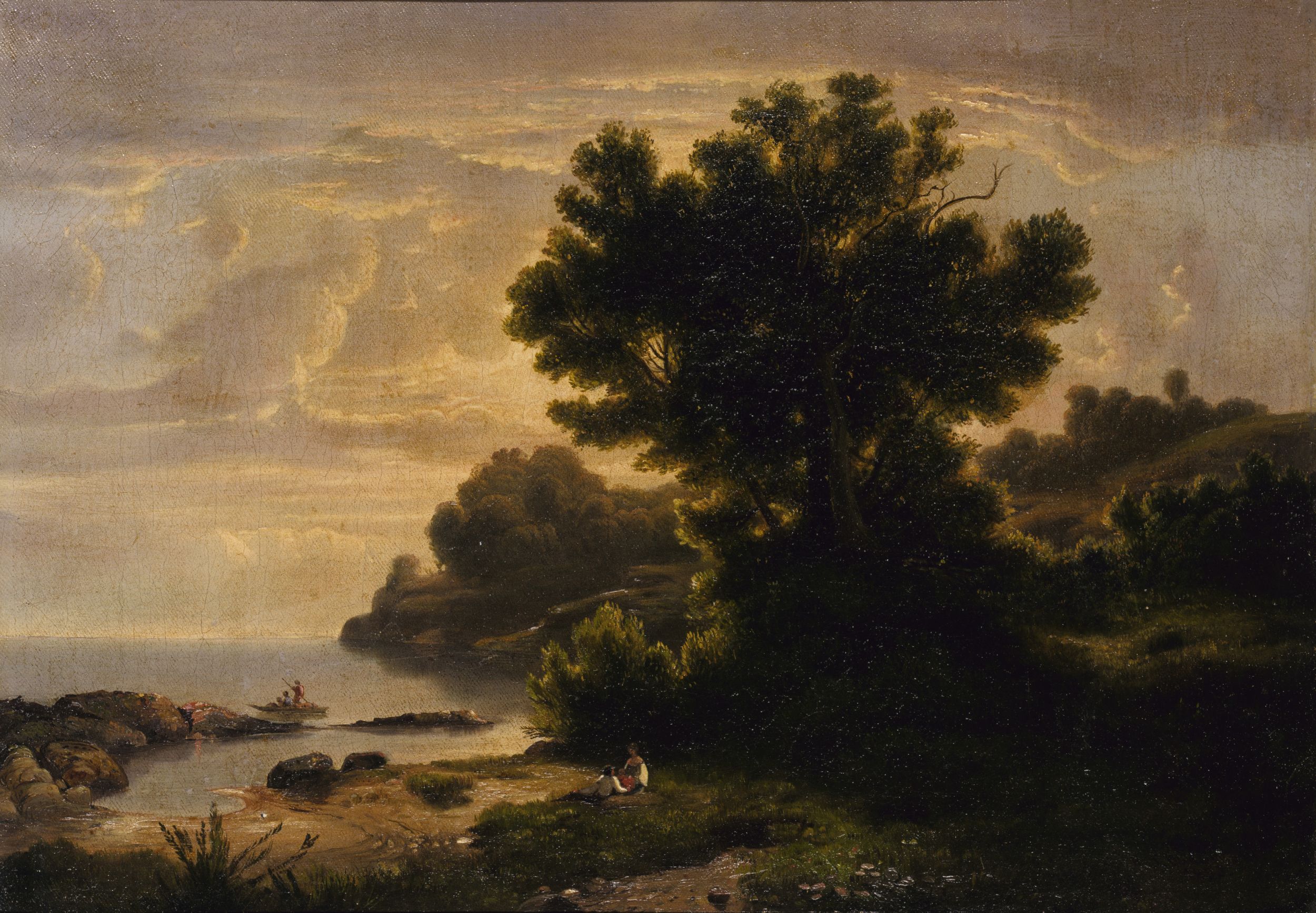
Coffin testified that Duncanson and Phoebe were “with the children from the time they came to my house, till they were put in the vault.”12 Johnson’s testimony corroborated Coffin’s statement: “Duncanson and Phoebe manifested the greatest anxiety for [the boys’] welfare.” He continues, “[Duncanson] was as kind to the children as any brother could be to his own brother,” adding that he “evinced a great deal of feeling when William Harry died.”13 We can speculate that this traumatic family event affected Duncanson in 1858, perhaps encouraging him to paint his elegiac work Landscape with Family by Lake (fig. 3), which includes two young children.
Prior to moving to Cincinnati, Coffin had relocated from North Carolina to Fountain City (formerly called Newport), Indiana, in 1826. He was a farmer, merchant, business leader, and a major investor in the Second State Bank of Indiana. This financial success allowed him to help others through his business activity and as a “conductor” on the Underground Railroad.
Coffin ran a private boarding house, and this constant influx of traffic was a useful cover for helping enslaved people come and go from his home. In his autobiography, he writes, “Our house was large and well adapted for secreting fugitives. Very often slaves would lie concealed in upper chambers for weeks without the boarders or frequent visitors at the house knowing anything about it. . . . Even the intimate friends of the family did not know when there were slaves hidden in the house, unless they were directly informed.”14
In 1847 Coffin moved to Cincinnati. In addition to running a private boarding house, Coffin also ran a warehouse that sold “free-labor goods” not made with slave labor. This may be how Duncanson met Coffin: The artist made fruit and flower still-life paintings in the late 1840s for some of Cincinnati’s leading horticulturalists (including his preeminent patron, Nicholas Longworth) who supported the “Free Produce” movement. Connecting Duncanson to Coffin also supports Shana Klein’s reading of Duncanson’s still-life paintings as intimately tied with the abolitionist-led Free Produce faction.15
Through Duncanson’s testimony and other witnesses’ descriptions of him, we learn an extraordinary amount about the artist. This case confirms that Duncanson was intimately networked with Cincinnati abolitionists—white and Black—while ensuring that his white brothers-in-law would be placed in a safe home. Coffin also knew Duncanson intimately enough to confirm his community standing: “His character is good.”16 Coffin would not have made a comment like this without having a sufficient relationship with Duncanson, whom, by 1858, he had known for nearly ten years.
Duncanson later testified in the second Taylor trial that he first met John James Taylor in 1850, when John James was boarding with Coffin.17 He later met Phoebe and Mary Ann in 1852 and began courting Phoebe in either 1854 or 1855, while she was living with Coffin. Duncanson also first met Milton Taylor in 1856 at Coffin’s house (42). These many meetings show that Duncanson was a frequent visitor to the abolitionist’s home.
While Coffin stated that many of his boarders were unaware of his Underground Railroad activities, it is likely that all three of Taylor’s formerly enslaved and biracial children were aware of and potentially assisted Coffin’s work. The Taylor children had been boarding with radical abolitionists since at least 1843. This includes John Rankin, one of the most active and open abolitionists in the Underground Railroad, and Daniel Parker, who founded the first integrated school in Ohio.18 Furthermore, Coffin testified that “we have never had anybody to live with us who conducted themselves more respectfully than [Phoebe].” This statement solidifies Phoebe’s status as not just a “boarder” but someone Coffin respected. From the Taylor children’s education history, their close relationship with Coffin, and the fact that they lived with the Coffins for close to a decade, we are led to believe that they were let into the abolitionist’s close circle of confidants and collaborators.
Coffin also mentions the Taylor children in his 1876 autobiography, Reminiscences of Levi Coffin. Coffin describes the children without naming them outright: “At another time, three slave children, from the State of Kentucky, were emancipated by their white father and placed under our care while they were obtaining an education. They attended school for several years, making our house their home during the intervals. They were nearly white, and were unusually bright and handsome children. They obtained a good education, grew up, and married respectably.”19 This is undoubtedly a reference to Taylor’s children and Phoebe’s marriage to Duncanson.
Finally, much like Coffin described Phoebe as “nearly white,” he identified Duncanson as “an artist, at least 7/8ths white.”20 Though this passing remark simply identified Duncanson to the court, the detail illustrates the inconsistent and flexible conditions in which Duncanson was interpreted as Black or white. For example, in the summer of 1850 (around the time he met John James Taylor), Duncanson traveled to North Carolina, which had laws on the books to expel or detain free Black Americans who entered the state.21 It seems that Southerners thought Duncanson was entirely white. However, in another testimony from this same case, Ransleur Johnson stated, “Duncanson is not a white man.”22 Together, these two statements illustrate the fraught and delicate context of describing “race” in the nineteenth century. The issues of colorism and passing are weighty topics, yet we point out these two descriptions to situate Duncanson within a landscape of racialization, where being labeled “white,” “Negro,” or “Mulatto” depended on subjective whims and ever-shifting language.
“Succession of Milton Taylor” (1872, 1876)
In 1869 Duncanson’s father-in-law, Milton Taylor, died in Cincinnati. Taylor was an enslaver, merchant, and owner of a rope-making facility (called a rope walk) who owned sizeable real estate holdings in Kentucky, Indiana, and Louisiana. Upon his death, these assets were awarded to Mary Ann on the grounds that she was Taylor’s only true child. All of Taylor’s adult children, however, were the product of a domestic partnership between their father and Anna Evans (died c. 1844), an enslaved Black woman whom he never married.23 Phoebe and John James filed a lawsuit against their sister to claim their inheritance and establish their legitimacy as Taylor’s children. After years of litigating this case in the Louisiana State Supreme Court and drawing on dozens of letters Taylor sent to his children throughout their lives, Phoebe and John James successfully proved themselves as his children.24
Through this case, we learn an astonishing amount of detail about Duncanson’s family life and his wife’s family. According to Coffin’s testimonial, Taylor emancipated his children and sent them to Ohio for schooling, yet their previous status of enslavement complicated their claims to their father’s estate.25 When Taylor died, he left behind multiple wills with competing dispensations for his children. In an unregistered memorandum to the will, Taylor wrote that Phoebe’s true father was a local saddler (or that saddler’s brother); Phoebe alleged that her father wrote this memorandum to insult her after one of their frequent “bitter quarrels” (29).
Through these trials, Duncanson’s father-in-law emerges as a polarizing and caustic figure. He fathered at least six children with Anna Evans and two with Catherine Shay. Known as a cad and a womanizer, he is described as having a notable sexual appetite. Duncanson testified in the case, “His mind was constantly running upon lecherous & lustful subjects, and he would continually talk about women & sexual intercourse with them” (45). He amassed land holdings worth about forty thousand dollars at the time of his death yet was often borrowing money. Taylor was consistently tangled up in lawsuits, tax liens, and local scandals.26 His Kentucky properties were also burned at least three times.27 In a criminal case in 1863, Taylor was charged and convicted of keeping a disorderly house and of “harboring free negroes.”28
Taylor also enslaved people throughout his adult life. In 1827 he acquired an enslaved sixteen-year-old child named Butler, as well as an enslaved man the next year, named Isaac (“aged about twenty one years”), and another child, Alfred (“aged about twelve years”).29 In one of the versions of his will that disinherits Phoebe and Duncanson, Taylor bequeaths one hundred dollars each to two of his “former slaves”: George Washington Evans (also Anna Evans’s son, but fathered by a Black man) and Henry Coleman. He writes, “They assisted me in acquiring my little property. I think it right to give a part of it back to them. They are to receive it semiannually” (103–4). He stipulates, however, “Shepherd and Liz, also my former slaves, I leave no bequests to, as they besides the trouble they gave me, stole from me, more than their shares would amount to” (104).
Duncanson described his father-in-law as often “peevish, irritable, & sullen,” and the cases relating to his slander and alimony payments paint him as a philanderer with erratic behavior. Phoebe testified, “He used to often to [sic] liken himself to [indecipherable] as having every man’s hand against him & would often say in ordinary conversation with us children that as soon as he had has plans matured he would kill, kill, kill, kill” (emphasis original) (22).
At the same time, Taylor’s letters show him as having surprisingly tender and supportive relationships with his biracial children. Dozens of letters included in the case file reveal him to be a devoted father who was eagerly inquiring after “my dear daughters,” buying them jewelry and silk dresses, asking after their studies ranging from philosophy to needlework, signing his letters “your affectionate father,” and sending them money, trinkets, and tender letters about life at home. While it is not unusual that Taylor fathered children with an enslaved woman, his decision to educate his daughters under the supervision of prominent abolitionists in Ohio is both unique and puzzling.30 Why did a man who enslaved people throughout his life choose to educate his biracial children in a free state and to send his daughters to school in a time when women’s education was exceedingly rare? This decision to send Phoebe to school in Ohio opened the door for her to meet Duncanson, who was fresh from his European Grand Tour.
Duncanson testified that he met Taylor in 1856 in Cincinnati: “I approached him in [Spencer House] & entered into conversation with him, in regard to marrying his daughter” (43). This is an important moment to highlight in Duncanson’s testimony: a Black man asking a white slaveholder for his biracial daughter’s hand in marriage. He married Phoebe on August 19, 1858. In his future correspondence with Duncanson, Taylor addressed Duncanson as “Esquire” when writing him, indicating deep respect and social equality.
In Duncanson’s 1871 deposition, he testified:
From that time Milton Taylor used to stop at my house whenever he came to the city. Part of the time after my return from Europe in 1866, I lived in the same family with Milton Taylor & Mary Ann Jane Taylor at the request of Milton Taylor. After he broke up housekeeping, he gave me his furniture. Milton Taylor treated all his children with kindness and I saw no difference in his treatment of them and I do not know that anyone received more benefit than the others. He held these his children out to the world as his. He used to address the sisters as “my daughters,” in ordinary intercourse with them (43).
Taylor and Duncanson developed a close friendship after their families were united by marriage. Phoebe testified that during their frequent conflicts, her father would cease writing her but always kept up his correspondence with her husband, “to whom he wrote constantly, as often as twice a week always & sometimes much oftener” (26). John James testified that, although his father quarreled with Phoebe, “he was always on good terms with Mr. Duncanson” (14). Taylor often sent his son-in-law money, offered him gifts and furniture, and visited his studio almost daily. Duncanson testified: “He was a constant visitor to my studio when he was in Cincinnati and always solicitous of my welfare & success” (44). William Wiswell, Cincinnati’s premier gilder and owner of a gallery below Duncanson’s studio, confirmed this in his testimony: “I knew Phoebe Ann after she married Mr. Duncanson not before. I did not know any of them before that time. Mr. Duncanson is an artist & has an office & studio in my building, & I have seen his wife & her father—Brother & sister in his studio as well as in my store very many times. I have seen Milton Taylor go to Mr. Duncanson’s studio twenty times to his coming into the store once” (55).
Through Phoebe’s deposition, we learn that she accompanied her husband to Canada between 1863 and 1865: “From the time of my marriage up to the year 1863 at which I moved to Canada” (39). When Duncanson left for the United Kingdom in 1865, she returned to Cincinnati and lived “on Ochler Street in Cincinnati” (39). She also testified that her father financed Duncanson’s second transatlantic voyage from Montreal to Londonderry in 1865: “He being then on the way to the World’s Fair in Dublin, where he had pictures on Exhibition sent over by the Canadian Government” (33). An 1865 newspaper article confirmed Duncanson’s journey and listed him as a “Canadian” artist in the Dublin exhibition, but this case underscores the fact that Duncanson was officially exhibiting under the sponsorship of the Province of Canada.31 Phoebe also testified that Duncanson returned on July 4, 1866.
Duncanson testified that Taylor’s mental state began to decline while he was abroad in 1865:
My wife wrote me when I was in Europe that the conduct of her father toward his children had changed. That it seemed his mind was affected but there was no change in his treatment towards me upon my return. He always treated me kindly & cordially. But I could see a change in his conduct towards his children. . . . More than once I heard him say that the left lobe of his brain was gone. He sometimes used to talk to himself in my studio. . . . He would at such times seem to be unconscious of the presence of anyone. And he would repeat the same & similar expressions over & over again (44, 46).
In one of Taylor’s unregistered wills, written in the 1860s, he disparages his daughter and son-in-law: “I give and divide to Phoebe Ann T. Duncanson, care out of R. S. Duncanson artist both of Cincinnati Ohio, the sum of one cent also. . . . I give her the said cent as a token of regard for her, and that I have not forgotten her in this my will, neither have I forgotten her most undutiful conduct towards me when I laid sick in bed in Fulton totally unable to help myself” (97–98).
In the same will, however, he leaves his grandson Milton a substantial sum, while simultaneously insulting him: “I give and devise to Milton Taylor Duncanson . . . who is about nine years old, the sum of one thousand dollars . . . because he is naturally inclined to be an artist, and as I think naturally too, will make a helpless sort of man, and besides, being one of the very best boys in the world, or at least that I ever was acquainted with” (98). Does this aside imply that Taylor believed an artist like his son-in-law to be “a helpless sort of man”? Although some of Duncanson’s paintings were valued in newspapers at up to $1,500, we know that he sold an oil painting to a Canadian collector named John Carpenter Baker in 1865 for eighty dollars.32 Phoebe’s testimony also confirms that their family boarded with “my brother’s on Hopkins Street” and then moved to “stay with [my father] and my sister so as to save Mr. Duncanson expense of boarding us” (27). Such recollections demonstrate that the Duncanson family was willing to live with the Taylors to save money.
Duncanson saw himself as an equal claimant in the case: “About a month ago John James Taylor, my wife, & myself joined in making a Power of Attorney to W. W. Handlin of New Orleans to act for us in the matter of our claims in the succession of Milton Taylor giving him full power to represent us & act in our behalf” (emphasis added). Duncanson also paid the cost of the court proceedings (58).
This case provides precious insight into Duncanson’s family life, which we have only obliquely glimpsed through census records and paperwork such as marriage certificates. Such archives were not intended to preserve traces of Black life or articulate the fullness of Black Americans’ lived experiences; in fact, such records often sought to dehumanize Black subjects. The “Succession of Milton Taylor” file fills in some of the gaps around Duncanson’s family life, but there are still many questions left to pursue, such as how he met Phoebe, whether he visited his father-in-law’s plantations in Kentucky, and whether his relationship with the Taylor family strained an already-tense relationship with his son Reuben.
Conclusion
Our focus here is on Duncanson and the new information that these cases reveal, although the case transcripts are full of more details. They contain many interwoven threads that we hope future scholars will unspool. For example, the transcripts include valuable details about integrated and coeducational schools in the Ohio River Valley, the costs of such education, which topics girls were expected to study in school, the logistics of steamboat travel, histories of arson and deliberate property destruction, considerations of sexual morals and standards of propriety, and parent–child dynamics in an upper-class and mixed-race family, and much more.
These cases also raise intriguing questions about friendships between radical abolitionists and enslavers that merit future study. Why did an enslaver reach out to several antislavery activists on the other side of the Ohio River on behalf of his mixed-race children, and why did he later elect to board and educate his “mulatto” daughters with the “president of the Underground Railroad” for over a decade? Coffin and Taylor were close friends for more than twenty years, and Coffin was at Taylor’s bedside as he died (391). Furthermore, how did a modest Quaker with strong antislavery feelings maintain a friendship with a sexually promiscuous enslaver who was constantly embroiled in Kentucky scandals?
Few Duncanson scholars have researched Phoebe’s life and family, which is why these cases have gone unexamined for 150 years. This discovery of the court transcripts demonstrates that scholars researching nineteenth-century artists have often focused too much on the men in these stories and not enough on their families’ lives, where precious data has been lying in plain sight. Researching all parts of an artist’s community, especially their female family members’ stories, can yield invaluable new information.
It took nearly seventy-five years after Duncanson’s death for a scholar to earnestly study him—James Porter published the first major essay on Duncanson in the mid-1940s—which means that during this intervening period, much information about the artist was lost or deliberately erased.33 Scholarly and institutional interest in Duncanson’s paintings has risen substantially in the past twenty years, yet the work was hampered by a profound lack of archival information. The discovery of these cases substantially increases what we know about Duncanson’s life and work and provides fodder for future investigations into his portrait commissions, his relationships with Cincinnati gallerists and abolitionists, and his financial affairs.
Cite this article: Katherine Gregory and Chris DeBow, “New Archival Evidence on Robert Duncanson from Two Lawsuits: “Taylor vs. Taylor” (1859) and “Succession of Milton Taylor” (1872, 1876),” Panorama: Journal of the Association of Historians of American Art 12, no. 1 (Spring 2026), https://doi.org/10.24926/24716839.20882.
Notes
- Levi Coffin, Reminiscences of Levi Coffin, the Reputed President of the Underground Railroad: Being a Brief History of the Labors of a Lifetime in Behalf of the Slave, with the Stories of Numerous Fugitives, Who Gained Their Freedom through His Instrumentality, and Many Other Incidents (R. Clarke, 1880), 671. ↵
- This confirmed relationship between the two men leads us to speculate that an unsigned portrait of Coffin—currently at the Levi Coffin Historic Site in Fountain City, Indiana—was painted by Duncanson in the late 1850s. Duncanson could have made this portrait as a gift to the abolitionist or as a paid commission. ↵
- James Dallas Parks, Robert S. Duncanson: 19th Century Black Romantic Painter (Associated Publishers, 1980), 30. While we do not have Reuben’s initial letter to Duncanson, the artist’s response makes clear that Reuben was accusing his father of not aligning himself with “the down-trodden race.” In this letter, Duncanson quotes Auguste Comte, whose philosophy of Positivism was an important touchstone for nineteenth-century progressives seeking to create and support racially integrated societies. Wendy Katz expands on this letter, and Duncanson’s relationship to Positivism; Wendy J. Katz, “Robert S. Duncanson, Race, and Auguste Comte’s Positivism in Cincinnati,” American Studies 53, no. 1 (2014): 79–115. ↵
- Kathryn Grover, Make a Way Somehow: African-American Life in a Northern Community, 1790–1965 (Syracuse University Press, 1995), 1–36. ↵
- Theresa Leininger-Miller, “New Discovery: Robert S. Duncanson’s Ruins of Carthage (1845),” Panorama: Journal of the Association of Historians of American Art 7, no. 1 (2021), http://doi.org/10.24926/24716839.11698. ↵
- We know, however, that Duncanson’s chief benefactor, Nicholas Longworth, was not an abolitionist. See Lynne Ambrosini, “Nicholas Longworth: Early Midwestern Activist Art Patron,” in Tastemakers, Collectors, and Patrons: Collecting American Art in the Long Nineteenth Century, ed. Linda S. Ferber and Margaret R. Laster (Pennsylvania State University Press, 2024). ↵
- Phoebe Ann Taylor became Phoebe Ann Taylor Duncanson on August 19, 1858, when she married the artist. ↵
- This case dragged on through 1876. In 1872, Phoebe Ann and John James were declared Taylor’s rightful heirs and thereby entitled to a portion of their late father’s estate. However, this verdict was immediately challenged by Thomas J. Throop, who was “representing the will of this deceased.” Ultimately, the case was relitigated in 1876 because Phoebe Ann, John James, and Mary Ann Jane were all children of an enslaved mother and thus legally Black, and the state was questioning whether any person of color could lay any claim whatsoever on a white person’s estate. After relitigating the case, these children were found to have a claim on Milton’s estate. Charles Gayarre, Reports of Cases Argued and Determined in the Supreme Court of Louisiana, vol. 28, 1876 (F. F. Hansell, 1877), 367–77. However, in 1879, the Times-Picayune reported that none of them would receive any inheritance because the state of Louisiana had spent the money. Though the petitioners submitted a bill for payment, “This was introduced, but reported upon unfavorably, although vouchers were annexed to establish the validity and justness of the claim. No reasons were assigned by the committee, but unofficially, petitioners were informed that no examination of their claim on its merits was made, and that it was rejected solely on the ground that the State had no money.” The Times-Picayune, January 10, 1879, 2. ↵
- The notice was then printed and circulated. Tri-Weekly Maysville Eagle (Maysville, KY), November 7, 1857, 3. ↵
- Phoebe Ann and Mary Jane boarded with a family in Liberty, and John James went into business with Levi Coffin’s son in Cottage Grove. These dates have been established through the second case discussed in this article, which presents a voluminous and thorough family history of the Taylors. ↵
- “The deposition of Martha Ann Johnson, taken at Mt. Pleasant Nov 18 1858,” in “Taylor vs. Taylor” (1859), Mason County Court Files, 1858–59, 1285. ↵
- “The deposition of Levi Coffin taken as above Nov 19 1858 at his house,” in “Taylor vs. Taylor,” 1298. ↵
- “The deposition of Ransleur Johnson, taken at the same time & place {Mt. Pleasant Nov 18 1858},” in “Taylor vs. Taylor,” 1291–92. ↵
- Coffin, Reminiscences of Levi Coffin, 301. ↵
- Shana Klein, “Cultivating Fruit and Equality: The Still-Life Paintings of Robert Duncanson,” American Art 29, no. 2 (2015): 64–85, https://doi.org/10.1086/683352. ↵
- “The deposition of Levi Coffin taken as above Nov 19 1858 at his house,” in “Taylor vs. Taylor,” 1298. ↵
- “Succession of Milton Taylor, Application of J. J. Taylor and P. A. T. Duncanson to Be Recognized as Heirs,” Reports, 1872, Historical Archives of the Louisiana Supreme Court, https://jstor.org/stable/community.40178644. Parenthetical page numbers below reference this source. ↵
- In “Succession of Milton Taylor,” we learn that Taylor and Rankin had a pair of matching silver tumblers. ↵
- Coffin, Reminiscences of Levi Coffin, 481. ↵
- Longworth describes Duncanson as a “light mulatto.” Hiram Powers Correspondence, 1829–51, MSS qP888I RMV, Cincinnati Museum Center. ↵
- These laws were inconsistently enforced, but free Black people found guilty of emigrating to North Carolina could be imprisoned and expelled from the state, or sentenced to years of enslavement. The famous Black cabinetmaker Thomas Day, who counted the North Carolina governor as one of his clients, had to petition the state’s attorney general for permission to bring his (not enslaved) wife from Virginia. ↵
- “The deposition of Ransleur Johnson, taken at the same time & place {Mt. Pleasant Nov 18 1858},” in “Taylor vs. Taylor,” 1292. ↵
- Marriage license and certificate for Henry Livingston Cleveland and Anna Evans, Milwaukee County, Wisconsin, October 16, 1890; Wisconsin Historical Society; Madison, Wisconsin; Pre-1907 Vital Records Collection. ↵
- The case was tried in Louisiana because that state had strict laws that regulated the conditions of property inheritance when one or more of the plaintiffs was Black or previously enslaved. ↵
- Coffin, Reminiscences of Levi Coffin, 481. This testimony is also confirmed in Opal Thornburg, “Levi Coffin and the Underground Railroad,” paper presented at the annual meeting of the Wayne County Historical Society, April 16, 1969, Levi Coffin Collection, Friends Collection and Earlham College Archives, Richmond, IN, https://archives.earlham.edu/repositories/2/resources/1566. Gayarre’s summary of the case includes a dissenting opinion by J. Wyly, who describes all the Taylor children as “illegitimate colored children” who were “the offspring of Milton Taylor by his colored concubine, who lived and died a slave.” Gayarre, Reports of Cases Argued and Determined in the Supreme Court of Louisiana, 373. ↵
- Taylor owed both federal and state tax liens in 1866. He was convicted in 1859 of slander and ordered to pay a settlement of $6,000 to Margaret Moran; Tri-Weekly Maysville Eagle, April 26, 1859, 2. ↵
- An 1849 fire in a downtown Maysville building destroyed $500 worth of his “rope and twine”; Louisville Daily Courier, August 13, 1849, 3. In April 1852 an arsonist burned at least six businesses in Maysville, including a “large lot of bale rope” belonging to Taylor worth $4,300. On July 20, 1852, Taylor was the victim of another arson attack that burned down $20,000 worth of his property, including his home and rope walk. Mark Duvall was arrested for this attack. Louisville Evening Bulletin, July 22, 1852. ↵
- “Commonwealth of Kentucky vs. Milton Taylor,” Judgments for Suffering (?) disorderly house to be kept on his premises, filed April 28, 1863, Mason County, case 22450. ↵
- State of Kentucky, Mason County, Marshall Key, Clerk, October 15, 1827, DB 31, p. 235; State of Kentucky, Mason County, Marshall Key, Clerk, March 26, 1828, DB 31, p. 420–26. We do not know if Taylor purchased Butler or acquired him through a purchase of land. Taylor purchased Isaac and Alfred from a trader named John W. Anderson, who owned a “slave jail” outside of Germantown, Kentucky. Marshall Key was the clerk who recorded the transfer of “property” (enslaved people) to Taylor. Interestingly, Key hosted Harriet Beecher Stowe when she visited Washington, Kentucky, in 1833 and watched a slave auction on the steps of the county courthouse. Key enslaved between seventeen and thirty people in his lifetime, yet his son Thomas Marshall Key, a future judge in Cincinnati, wrote the bill for the emancipation of slaves in Washington, DC, in 1861. Thomas Key also appears in Milton’s letters to Phoebe Ann in 1854, writing to her that John James “should see Thomas Key and thereby see what can be done for him”; “Succession of Milton Taylor,” 67. ↵
- Milton Taylor’s children studied at Red Oak Presbyterian Church, which was a stronghold for abolitionists, founded by Rev. James Gilliland. They also lived with Rev. John Rankin and studied at the Parker Academy under the Rev. Daniel Parker and his son James K. Parker. ↵
- Edward Radford, “Canadian Photographs,” Art Journal 4 (1864): 113. ↵
- Sonia Del Re, “The View From Here: Robert S. Duncanson’s Canadian Watercolours,” National Gallery of Canada, February 6, 2025, https://www.gallery.ca/magazine/exhibitions/the-view-from-here-robert-s-duncansons-canadian-watercolours. ↵
- James A. Porter, “Robert S. Duncanson: Midwestern Romantic-Realist,” Art in America 37 (1951): 99–154. ↵
About the Author(s): Katherine Gregory is a Visiting Assistant Professor of American art at Wake Forest University. Chris DeBow is an independent collector and researcher based in Cincinnati.