

HBCU Art Survival in the Wake of Federal Cuts





Colleges and universities are in crisis, experiencing decreased enrollment, the discontinuation and prohibition of Diversity, Equity, and Inclusion (DEI) initiatives, and faculty terminations for teaching the full spectrum of social and political theories in their classrooms.1 Under federally mandated directives, many academic programs in the state of Florida have had to reformulate purportedly “woke” class content.2 Within these upending shifts, it is important for university art leadership, especially at Minority Serving Institutions (MSIs), to strategize on how to traverse the changing landscape of higher education’s metrics-based funding, federal budget cuts to the arts, and rollbacks targeting MSIs. Cultural institutions housed on campuses, such as academic museums and galleries, must find ways to sustain themselves amid these obstacles.
I serve as the gallery director for the Foster-Tanner Fine Arts Gallery, a teaching gallery on the campus of Florida A&M University (FAMU)—the state’s only public Historically Black College and University (HBCU). The gallery and the Fine Arts Program are going through noteworthy programmatic changes.3 FAMU’s art program is small, with three faculty members, offering art foundations, including course sections in design, drawing, painting, printmaking, and art history. Recently, the Florida Board of Governors categorized FAMU’s fine arts department as an underperforming program and placed it on the Program of Strategic Emphasis (PSE) list—a categorization now serving as the basis for an extensive restructuring and consolidation.4 The Fine Arts Program is now poised to join the School of Journalism’s Graphic Design Program in fall 2026, creating a new Graphic Design and Digital Art Program with an emphasis on Artificial Intelligence (AI).
I understand that art media is ever-changing and multidimensional, and I see new media art as a culturally significant art form and genre. Supporting digital art, especially for our digital-native students, makes sense. I am excited about exploring Black new media artists and fostering an emerging cohort of digital and new media artist scholars at FAMU. I am also interested in the ways AI can assist with analyzing our museum visitor data and improving museum visitor experience, such as visiting patterns, visitors’ interests, and optimizing interpretive tools.5 My hope during our program’s transition, however, is that the new program will be implemented thoughtfully while maintaining its core art foundation courses.
The consolidation of FAMU’s Fine Arts Program is happening as I write this article, so the future of the art gallery is unknown. Still, I must prepare for the personal and professional burdens imposed by Florida’s steep arts funding cuts and the “anti-woke” legislation efforts impacting public funding.6 Although these circumstances are discouraging, I draw strength and inspiration from a variety of sources. For example, amid the turbulence of the Trump administration and the erasure of Black and other marginalized cultures in museums, it is encouraging to see exhibitions like the Smithsonian’s At the Vanguard: Making and Saving History at HBCUs (through July 19, 2026) recount the history of HBCU museums and cultural institutions.7 It has also been restorative to collaborate with fellow HBCU museum professionals, Black colleagues in the field of academic museums and galleries, and organizations like the Association of African American Museums, Museum Hue, and Arts Administrators of Color Network. They have served as channels for shared dialogue, research, and support in sustaining Black arts leadership and culture.
FAMU’s art program, its faculty, and opportunities have shaped my dedicated service to future students, and as an HBCU art alumna, current administrator, and art educator, I am committed to enduring the challenges presented in our current moment. My work advocates for a greater understanding of and appreciation for FAMU and the Fine Arts Program’s history. Located in Tallahassee, Florida’s capital, FAMU was founded in 1887 as a land-grant institution.8 Its art program was established in the 1930s as a program of the “graphic and plastic arts.”9 In 1953, artist, author, art historian, and educator Dr. Samella Lewis served as chair of the Department of Art and Ceramics (fig. 1). She started this position two years after graduating from the Ohio State University—the first Black woman to receive a PhD in art history.10 Inspired by her work with artist and activist Elizabeth Catlett, Hampton University art educator Viktor Lowenfield, and prominent artists associated with the Works Progress Administration (WPA), Lewis fiercely championed Black art, holding the mantle for the inclusion of Black artists in mainstream institutions and publications during a period of blatant exclusion by the art establishment.
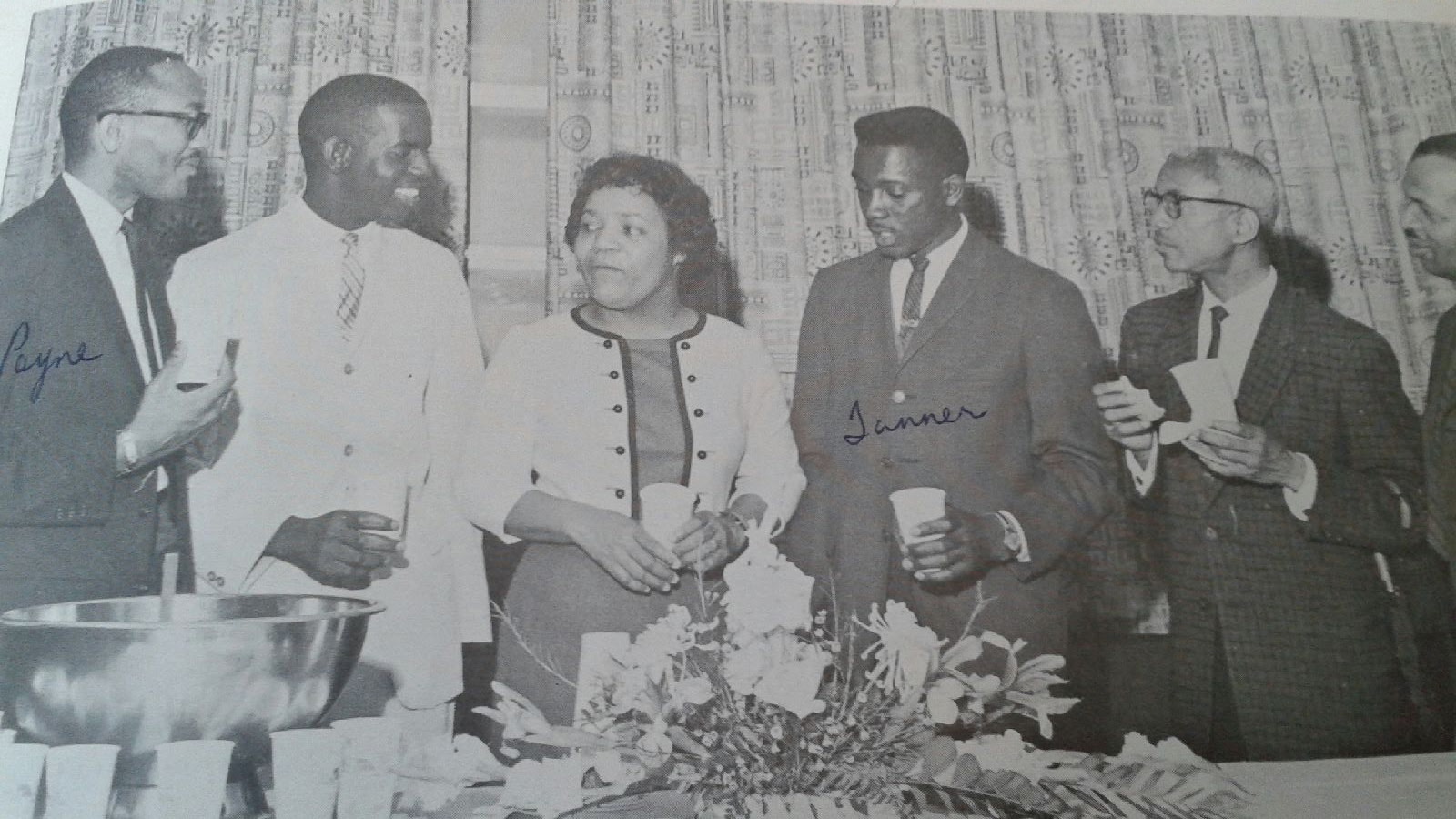
Building on Lewis’s legacy, her successor Dr. Howard Lewis—department chair from 1958 to 1974—established the “FAMU Art Gallery,” later the Foster-Tanner Fine Art Gallery, as an exhibition space for recurring art exhibitions and the presentation of student art. For the last fifty years, FAMU’s gallery has served as a teaching gallery and kunsthalle for rotating exhibitions of Black contemporary artists, including Camille Billops, Elizabeth Catlett, Leon Hicks, Faith Ringgold, Betye Saar, John T. Scott, Joyce C. Scott, and many others. As an HBCU art gallery, we cultivate awareness and respect for visual art and the advancement of cultural leadership in the next generation of Black artists, curators, art administrators, and art educators.
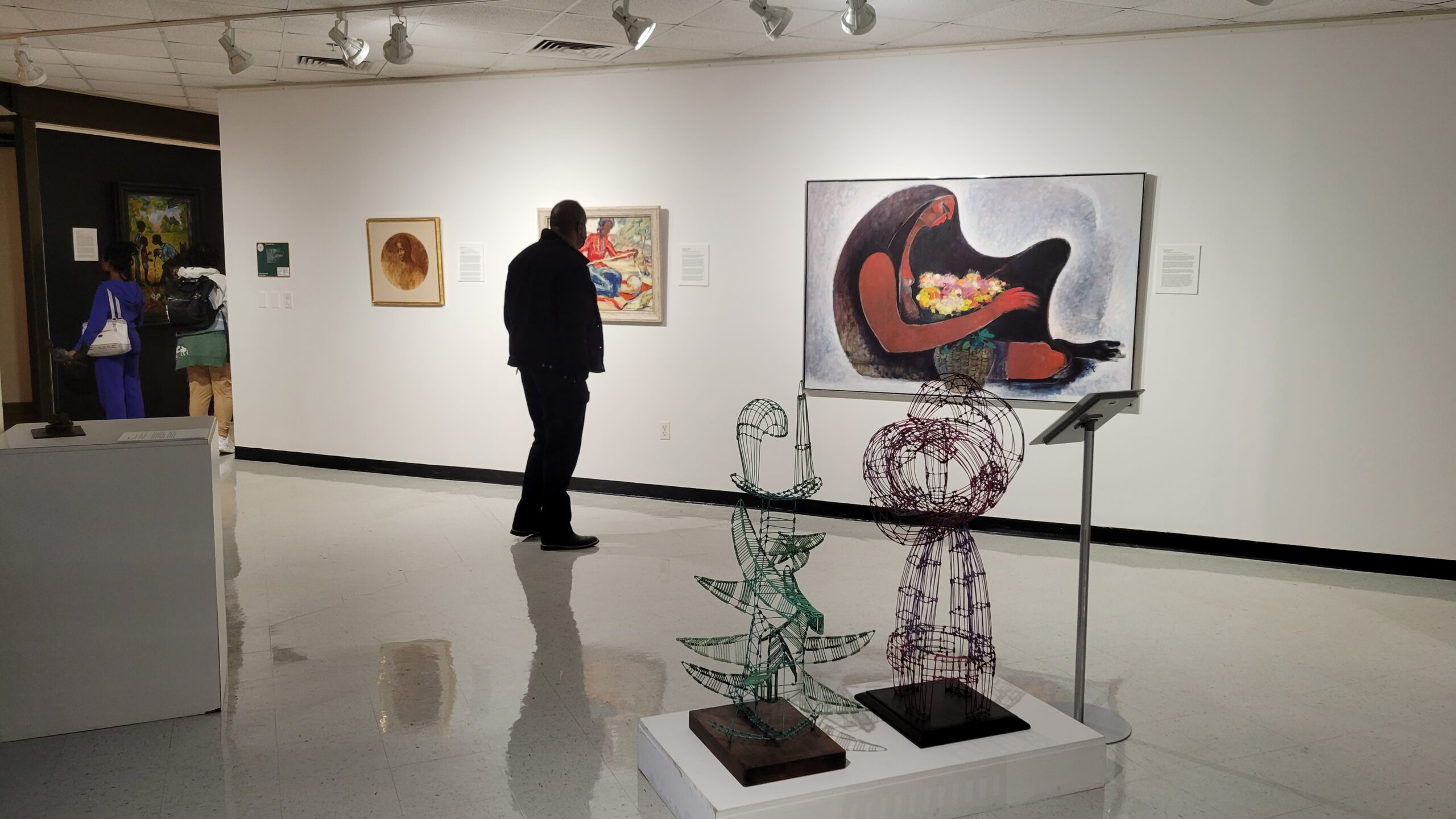
I have experienced FAMU’s art gallery from multiple perspectives. As an undergraduate art student, I used the gallery as a resource for understanding Black art, artists, and exhibitions and for learning how to professionally display my own student work. As a doctoral student, I utilized the gallery as a research center for understanding how exhibition spaces, especially those on college campuses, can provide a counternarrative to the marginalization of Black artists in the larger art historical canon/ discourse. Today, as the gallery’s director in this uncertain time, my commitment is to continue the legacy of FAMU’s Fine Arts Program, and the Foster-Tanner Fine Arts Gallery, while contributing to the new program’s objectives. It was particularly fulfilling to present exhibitions like Shared Treasures from the Kinsey Collection (2016) and Elevation from Within: The Study of Art at Historically Black Colleges and Universities (2022) (fig. 2)—meaningful responses to the legacy of HBCU art programs, their faculty, and alumni.
HBCU art spaces are vital for the future of Black artists, so it is important to take lessons from figures such as Dr. Samella Lewis, who made immeasurable contributions in researching, documenting, collecting, and presenting Black artists to the world. HBCU art institutions were pivotal in elevating Black artists and their work when mainstream museums did not. It is increasingly imperative that HBCU academic arts administrators and leaders continue fighting for the elevation of Black artists amid national defunding, censoring, and the re-writing of Black history. In the spirit of the FAMU’s early generations of artists, educators, and administrators, I find pride in advocating for, adapting, and sustaining the gallery during this time of programmatic and administration transformation.
Cite this article: Aja Roache, “HBCU Art Survival in the Wake of Federal Cuts,” in “Call and Response: DEIA Tensions in Scholarship, Practice, and National Identity,” Colloquium, edited by Keidra Daniels Navaroli and Frederica Simmons, Panorama: Journal of the Association of Historians of American Art 12, no. 1 (Spring 2026), https://doi.org/10.24926/24716839.20983.
Notes
- Florida Department of Education, “Florida Department of Education Statement on USDOE Directive to End Racial Preferences in Education,” February 17, 2025, https://www.fldoe.org/newsroom/latest-news/florida-department-of-education-statement-on-usdoe-directive-to-end-racial-preferences-in-education.stml. ↵
- Executive Office of the Governor, State of Florida, “Governor Ron Desantis Signs Legislation to Protect Floridians from Discrimination and Woke Indoctrination,” April 22, 2022, https://www.flgov.com/eog/news/press/2022/governor-ron-desantis-signs-legislation-protect-floridians-discrimination-and-woke. ↵
- Alyssa Brown, “FAMU Restructures African American Studies, Fine Arts Programs Amid Student Pushback,” Edu Ledger, February 13, 2026, https://www.theeduledger.com/institutions/hbcus/article/15817175/famu-restructures-african-american-studies-fine-arts-programs-amid-student-pushback. ↵
- “Programs of Strategic Emphasis,” State University System of Florida, accessed June 9, 2026, https://www.flbog.edu/resources/academic/programs-of-strategic-emphasis. The Florida State University System (SUS) and Florida Board of Governors’ Programs of Strategic Emphasis align the degree production goals of the SUS with Florida’s workforce needs and economy-driven fields and aims to revitalize the program through reform, such as consolidation. Programs that are underperforming in the context of student return of investment for their tuition and post-graduation salary. ↵
- Museum Next, “Revolutionizing Museums: How AI-Driven Data Analysis is Changing the Game.” December 14, 2024, https://www.museumnext.com/article/revolutionizing-museums-how-ai-driven-data-analysis-is-changing-the-game. ↵
- “Governor Ron Desantis Signs Legislation.” ↵
- For more, see “At the Vanguard: Making and Saving History at HBCUs,” National Museum of African American History and Culture, Smithsonian Institution, accessed June 9, 2026, https://nmaahc.si.edu/explore/exhibitions/vanguard. ↵
- “What is a Land Grant University?” Association of Public Land Grant Universities, accessed June 9, 2026, https://www.aplu.org/about-us/history-of-aplu/what-is-a-land-grant-university. ↵
- This information was retrieved from the Foster-Tanner Fine Arts Galleries archives of past catalogues located in the Foster-Tanner Fine Arts Gallery. The catalogue’s foreword was written by Howard Lewis FAMU’s Department of Visual Art Chairman in 1986. See “Historical Background,” In FAMU 1887–1987 Centennial Exhibition at the University Gallery (FAMU Centennial Committee, 1987). ↵
- Richard J. Powell and Jock Reynolds, To Conserve a Legacy: American Art from Historically Black Colleges and Universities, exh. cat. (Addison Gallery of American Art, 1999). ↵
About the Author(s): Aja Roache is the gallery director for the Florida A&M University Foster-Tanner Fine Arts Gallery.