

New “Crossings” in the Collection of the High Museum of Art in Atlanta





PDF: Jentleson and Pullagura, New Crossings
In Crossing Waters—a powerful memorial of the transatlantic slave trade—artist Thornton Dial Sr. (1928–2016) uses a palette of blue, purple, and white paint and a web of cloth strips to mimic light rippling across open water after a shipwreck (fig. 1). The absent vessel has sunk beneath the surface, leaving an oval of stillness in its wake as wreckage collects around the border. In the lower right, Dial includes the harrowing detail of a small figurine repainted to depict a white enslaver holding the headless body of a Black man. This addition emphasizes the brutality of enslavement and underscores the artist’s interest in reusing material to confront the most difficult episodes of world history. In this way, even without formal artistic training, Dial participates in the tradition of history painters whose choice of subject matter emphasized those formative events that speak to larger ideas of a people, their history, or their country. Indeed, the water crossing Dial chose to depict is no less foundational to American nationhood than the more art-historically ubiquitous image of George Washington’s voyage across the Delaware River.
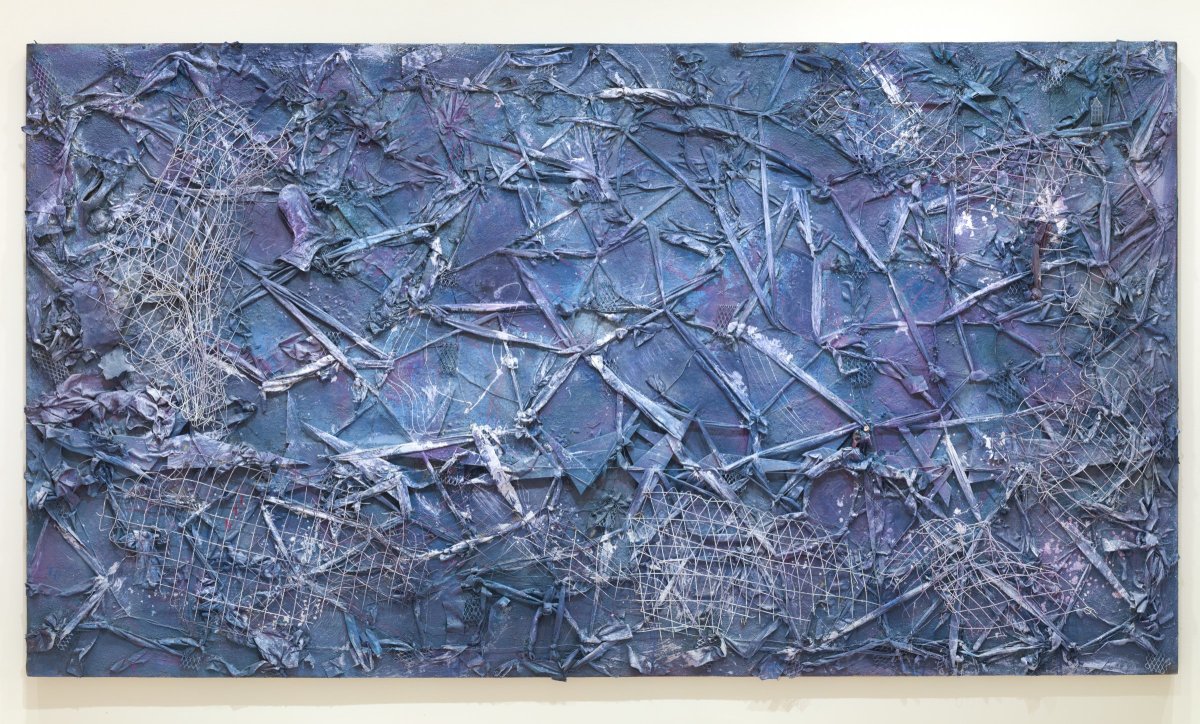
As the High Museum of Art in Atlanta prepares to celebrate its centennial in October 2026, a new presentation of its American galleries featuring unprecedented cross-collection dialogues, such as Dial’s Crossing Waters, widens the scope of our focus on the so-called American art canon.1 This refreshed installation draws on five of the museum’s seven collecting areas to create a story of American cultural production that only the High can tell. One of the principles of this reinstallation is to convey that there has never been a singular way to be or become an artist in the United States, evidenced by a collection rich with creators who took diverse paths to achieve mastery of form and style as well as depth of signification.
This reinstallation traces a visual journey that spans early American design and the museum’s celebrated Neoclassical sculpture collection to a pluralistic view of modern art and design between the World Wars. Although these new galleries remain chronologically organized, transhistorical moments occur throughout, represented by artists from the Folk and Self-Taught, Decorative Arts and Design, Modern and Contemporary, and Photography departments—from vanessa german and Carolyn Mazloomi to Robell Awake, Jiha Moon, Jaune Quick-to-See-Smith, and Carrie Mae Weems, among others—who enrich conversations with historic makers. The didactic program will also dive into iconic eras, schools, and breaks from convention in American art history. It includes new research on everything from Henry Inman’s nineteenth-century racializing portraits of Indigenous leaders to the identity politics surrounding Southern furniture production.
If the “canon” of American art can be thought of as a construction, then our task is to look carefully and fully at the diverse breadth of achievements by the many artists and makers who lived, practiced, or traveled to the United States to create their work. As we grow the collection and deepen our understanding of these objects, the galleries will also change, forming an ongoing presentation that seeks to undo hierarchical assumptions while centering the questions, provocations, and creativity of these artists within their time and in ours today.
Cite this article: Katherine Jentleson and Anni A. Pullagura, “New ‘Crossings’ in the Collection of the High Museum of Art in Atlanta,” in “In the Galleries,” edited by Elizabeth McGoey and Sara Picard, Panorama: Journal of the Association of Historians of American Art 12, no. 1 (Spring 2026), https://doi.org/10.24926/24716839.21046.
Notes
- The curatorial team for this reinstallation of American art at the High is led by Anni A. Pullagura, the Margaret and Terry Stent Associate Curator of American Art; Katherine Jentleson, Senior Curator of American Art and Dan Boone Curator of Folk and Self-Taught Art; and Monica Obniski, Curator of Decorative Arts and Design; with Caroline Giddis, former curatorial research associate. ↵
About the Author(s): Katherine Jentleson is Senior Curator of American Art and Dan Boone Curator of Folk and Self-Taught Art and Anni A. Pullagura is Margaret and Terry Stent Associate Curator of American Art, both at the High Museum of Art, Atlanta.