

Place, Memory, and the Land’s Breath: A Palimpsest of Lakȟóta and US Epistemologies





PDF: Burns, Place, Memory, and the Land’s Breath
On the 250th anniversary of the United States’s founding, I am abroad at the University of Oklahoma’s campus in Arezzo, Italy. Working alongside professor of Native American studies Farina King and twelve students, we are focusing on histories of Native Americans and the American West in Italy. With the course emphasis and my ongoing research on public sculpture, identity, and settler colonial memory, my mind is trained on questions of how land and landscapes remember and how art history elicits entangled memories, bringing them into public awareness through analysis. Using the visual field, can art history summon the palimpsest that is place and perceive those layers simultaneously?
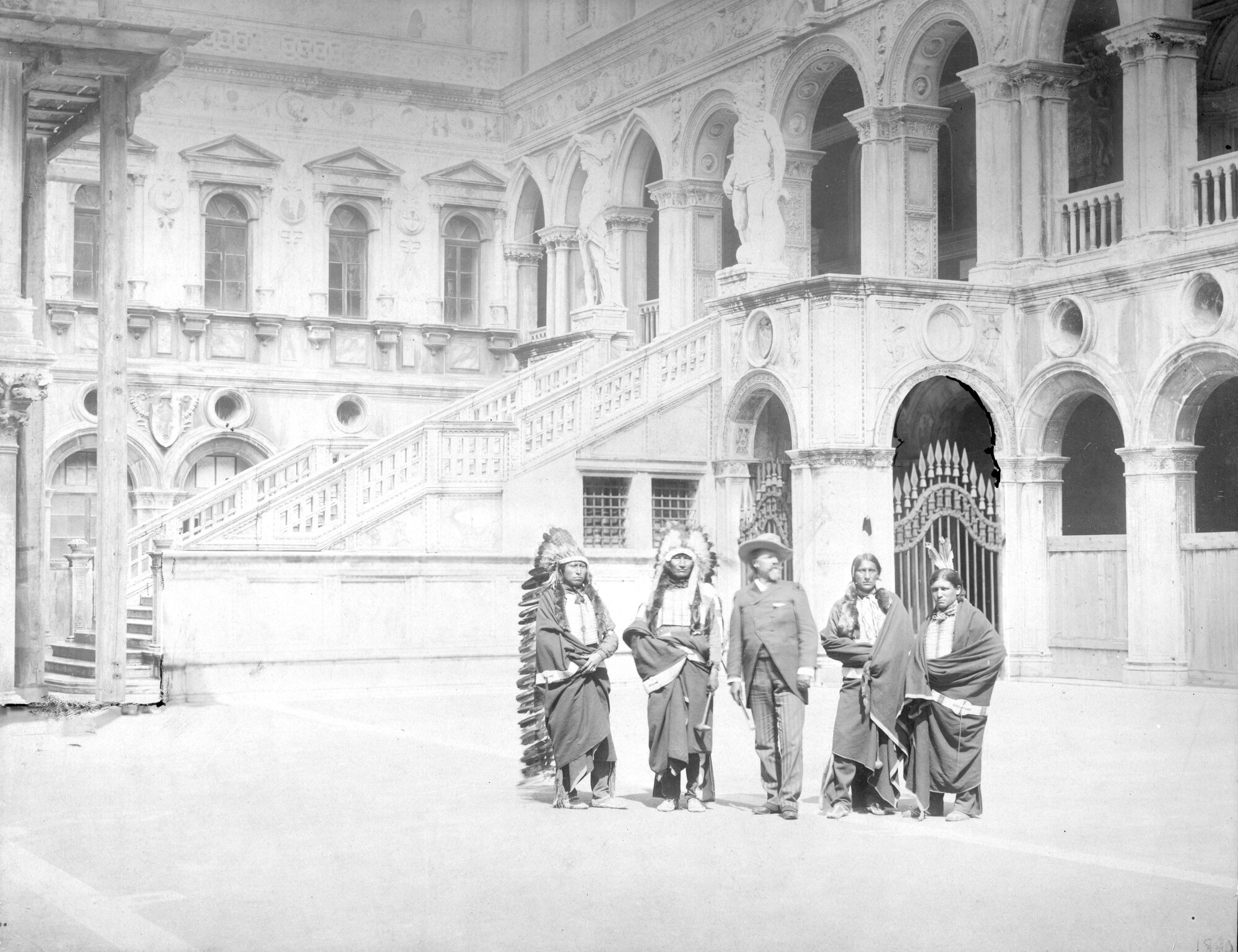
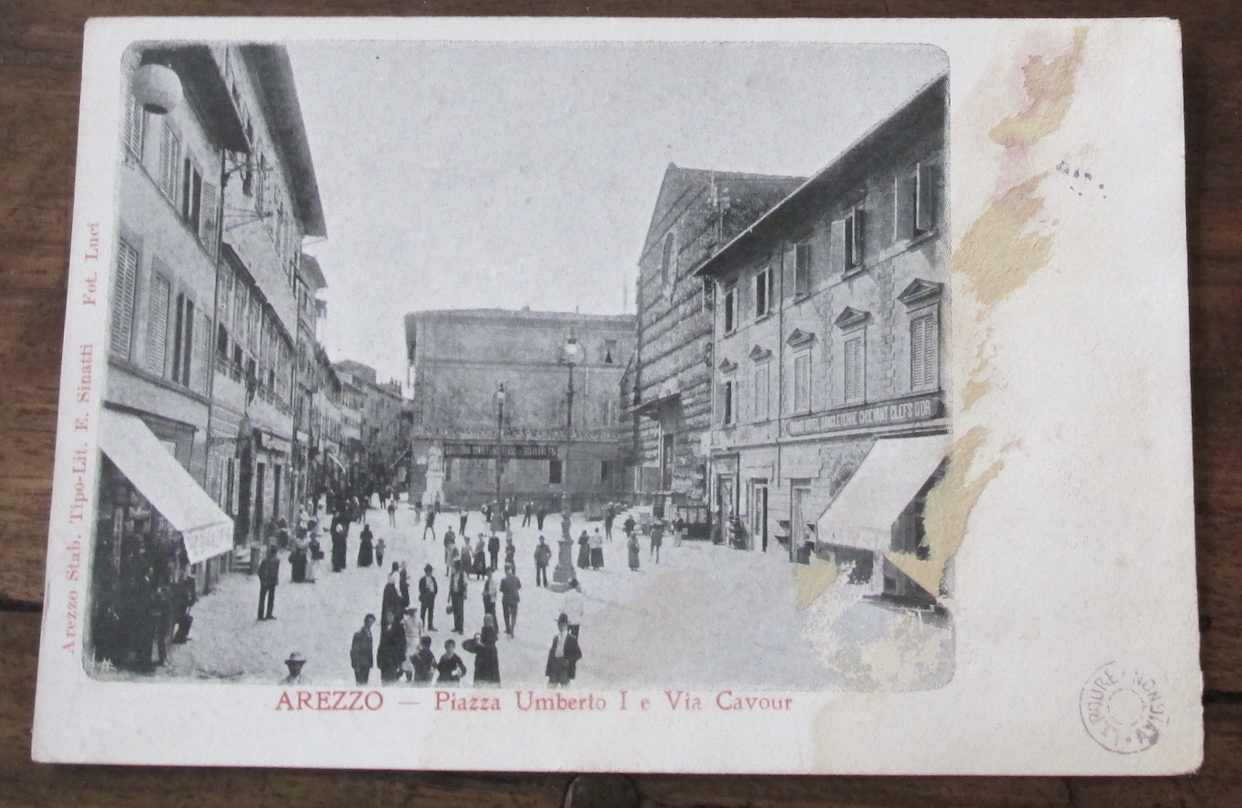
As my students and I studied photographs by Paolo Salviati of Lakȟóta performers in Buffalo Bill’s Wild West, a traveling spectacle recounting histories of US Western conquest, in Venice in 1890, at the very locations where those photographs were made, in and near the Doge’s Palace and the Piazza San Marco (fig. 1), we wonder if these places imbue their memory inherently or as enlivened by our presence. These questions were also brought to the fore through consideration of historical photographs and the photographs of Native American dancers who performed in the opening and closing ceremonies of the 2024 Venice Biennale, when Jeffrey Gibson’s work was installed in the US Pavilion.1 My students evoked the ephemeral salty breezes and squawking sea gulls to connect with what the performers may have smelled and heard. In Arezzo, we picture Buffalo Bill’s Wild West with eighty Lakȟóta performers, which was staged here on March 31, 1906, during its tour across thirty-four Italian cities. How does this place remember these performers who paraded up the Corso Italia in the city’s medieval heart? Can we conjure these histories by reviewing newspapers trumpeting the Wild West’s arrival in the Arezzo library? Or through the postcards Lakȟóta performer Jacob Ištá Ská (Jacob White Eyes) mailed to a correspondent in Provence, France, one depicting the square flanking the thirteenth-century basilica of San Francesco (fig. 2)?2 Does stitching together these histories activate them in place? Or do they repose, a palimpsest seen or unacknowledged?
I mobilize similar questions of the entanglements between place, memory, epistemology, and history in my research on Mount Rushmore, the famed, if highly controversial, sculpture celebrating four US presidents—George Washington, Thomas Jefferson, Abraham Lincoln, and Theodore Roosevelt—in South Dakota.3 How does the sculpture, excavated with dynamite and carved under the direction of Gutzon Borglum (1867–1941) between 1927 and 1941, with regular dedications as the artwork progressed, articulate patriotic narratives? Within the landscape known to Lakȟóta people as Ȟe Sápa (Black Hills, named for the dark color of the conifers), how does the site recall and perpetuate its Lakȟóta spiritual, historical, and epistemological relationships? Writing in the mid-1980s, Lakȟóta leader Frank Fools Crow describes the Ȟe Sápa as “the heart of everything that is.”4 The mountain Tȟuŋkášila Šákpe (the Six Grandfathers), where the presidential faces are carved into the rockface, operates as a cultural and spiritual center for Lakȟótas, a sacred site signifying the six directions—north, south, east, west, above, and below. Its cosmological significance is also tied to the vision that Lakȟóta spiritual leader Heȟáka Sápa (Black Elk) had at the site in 1873, in which he received gifts from each of the grandfathers. He recalled: “While I stood there I saw more than I can tell and I understood more than I saw; for I was seeing in a sacred manner the shapes of all things in the spirit, and the shape of all shapes as they must live together like one being.”5 While the rocks’ undulations and projections lean toward anthropomorphism, Lakȟóta epistemologies exceed a literal reading of figuration. As anthropologist David Posthumus discusses, Lakȟótas recognize many rock forms, or Inyan, as spiritually animate (wakan) and as “doorways to the other world, technologies for the descent into ritual virtuality, and interfaces between common, quotidian realities and the spirit world.”6 These layers remain an embedded part of the land, though Lakȟóta understandings of place are often sublimated by the US narratives around the site, which elevate nationalist readings and overlook the violence that is also a layer of memory.
Many Americans do not recognize Mount Rushmore as a settler colonial monument reifying US power. The 2024–25 exhibition Complicated Legacies: Museum History, White Supremacy, and Sculpture, curated by Naomi Slipp at the New Bedford Whaling Museum in Massachusetts, asked visitors to consider how Borglum’s ties with the Ku Klux Klan, expression of White nationalist rhetoric, and assertion of Confederate memory should shape museum displays of his sculptures. In August 2025, I overheard a visitor, observing side-by-side photographs of Mount Rushmore and Stone Mountain in Georgia (Borglum’s massive relief sculpture of three Confederate leaders), exclaim, “It’s amazing to think the same sculptor made both monuments—one is a symbol of White supremacy and the other is a symbol of American democracy and freedom.” Notably, a viewer recognizing White nationalism in Confederate imagery did not identify the same threads in Mount Rushmore, even while scholars read them as “an interrelated grammar of white conquest.”7
More work is needed to embed in public discourse how the decision to build the Mount Rushmore monument, its design, and its location are entwined with the histories of Indigenous land expropriation in the region and its subsequent contestation. The blasting and carving away of sacred, animate stone and its replacement with four White presidential visages was an act of settler colonial violence that disregarded the key role of Ȟe Sápa for Lakȟóta identity and epistemology. US government proposals to add the current president’s face to the mountain and musings about the plausibility of such an act in the media often omit or gloss over this history, continuing to disregard past oppression and legacies of trauma for Lakȟóta community members.8
The 2022 documentary Lakota Nation vs. the United States shows the monument as part of a land grab, recounts histories of land theft, and prompts a closer look at the chronological entwinements between legal history and the monument’s proposal and construction. Indeed, the conception and construction of the sculpture coincides with Lakȟóta contestation and legal claims in the twentieth century. After gold was discovered, the Congressional Act of February 28, 1877, illegally took the Black Hills from Lakȟóta territories that had been established in 1851 and refined in 1868, pushing Lakȟótas to the far east of the hills.9 Lakȟótas had been gathering to demand political action about the land theft since at least the late 1880s and had mounted increasingly consolidated efforts to gain legal visibility in the early twentieth century.10 In June 1920, Congress finally acknowledged that the US claims court had jurisdiction over an Indigenous land claim, a lawsuit that passed through the courts over the next six decades.11 In 1980, the US Supreme Court decided in favor of the Lakȟóta Nation, demanding the US government pay for the value of the land and its minerals, which in 2024 was approaching two billion dollars.12 Lakȟóta leaders have refused the payment, requesting instead reinstated sovereignty in the region.
The common narrative is that the idea for Mount Rushmore was conceived by South Dakota state historian Doane Robinson in the summer of 1923 to encourage tourist automobile traffic to the Black Hills.13 This retelling never makes explicit the fact that a Lakȟóta court claim against the United States for the theft of Ȟe Sápa was initiated on May 7, 1923.14 This concurrence suggests a greater entwinement between the public art project and Lakȟóta contestation of settler colonialism in the legal system: At the moment of legal contest in this place, a physical marker of US government possession was initiated at a Lakȟóta sacred site. The erasure of this story from histories of Mount Rushmore exemplifies what Eve Tuck and K. Wayne Yang have named “settler moves to innocence.”15
Robinson’s idea was for a monument in the rockface highlighting key figures of frontier histories, including Meriwether Lewis and William Clark, Sacagawea, George Armstrong Custer, and Maȟpíya Lúta (Red Cloud), who had been involved with negotiations about Lakȟóta lands in the 1860s and 1870s.16 Robinson wrote one of the first settler histories of the Lakȟóta Nation, in which he claimed a “neutral opinion” of US expropriation of Lakȟóta lands yet also asserted, “The course of the Sioux as a tribe is now completed.”17 In 1911 Robinson attended and reported on a Lakȟóta convening about Ȟe Sápa, writing in the newspaper that Lakȟótas had “equitable claim,” an article immediately countered by Pine Ridge agent John Brennan.18 While Robinson may have concurred with the Lakȟótas’ land claim, his 1923 plan suggests both a lack of understanding of Lakȟóta epistemologies that perceive animacy in rock and an imperialist nostalgia for memorializing this history and erasing culpability. In May 1923, the preponderance of nationwide news articles—both serious and mocking—about the Ȟe Sápa suit certainly kept the location front of mind for Robinson.19 But Robinson’s “idea” disavowed Lakȟóta claims to sovereignty as they formalized on the national stage. Mount Rushmore’s violent production, through dynamite and explosives in the rocks as well as large-scale carving, deliberately attempted to destroy the Lakȟóta body in the earth.
The completion of Mount Rushmore upon Borglum’s death in October 1941 concurred with the court of claims finally addressing the 1923 lawsuit, after years of the US government documenting its annuity expenses for Lakȟótas. The claims court finally evaluated evidence in October 1941 and then dismissed the case in June 1942.20 Historian Jeffrey Ostler suggests, “There is no link between the two events [the monument’s completion and the lawsuit’s dismissal],” yet the correspondence between the fanfare around the celebration of White male US authority produced a strong backdrop for a decision continuing to deny Lakȟóta sovereignty.21
The visual field has the power to naturalize presence, instill narratives, and affirm ownership, both at Mount Rushmore itself and through the circulation of site photography. Yet studying these entwined chronologies, reckoning with the potency of images, and framing the monument’s history through Lakȟóta origin stories and epistemology shows that Mount Rushmore was always more than a patriotic and regional tourist driver; it was also an attempt to literally efface Lakȟóta identity, beliefs, and culture, subverting it to US presidential authority, as the film Lakota Nation vs. the United States and the wider Land Back movement articulate. The site was never, as one journalist recently described it, “a blank shelf of granite.”22
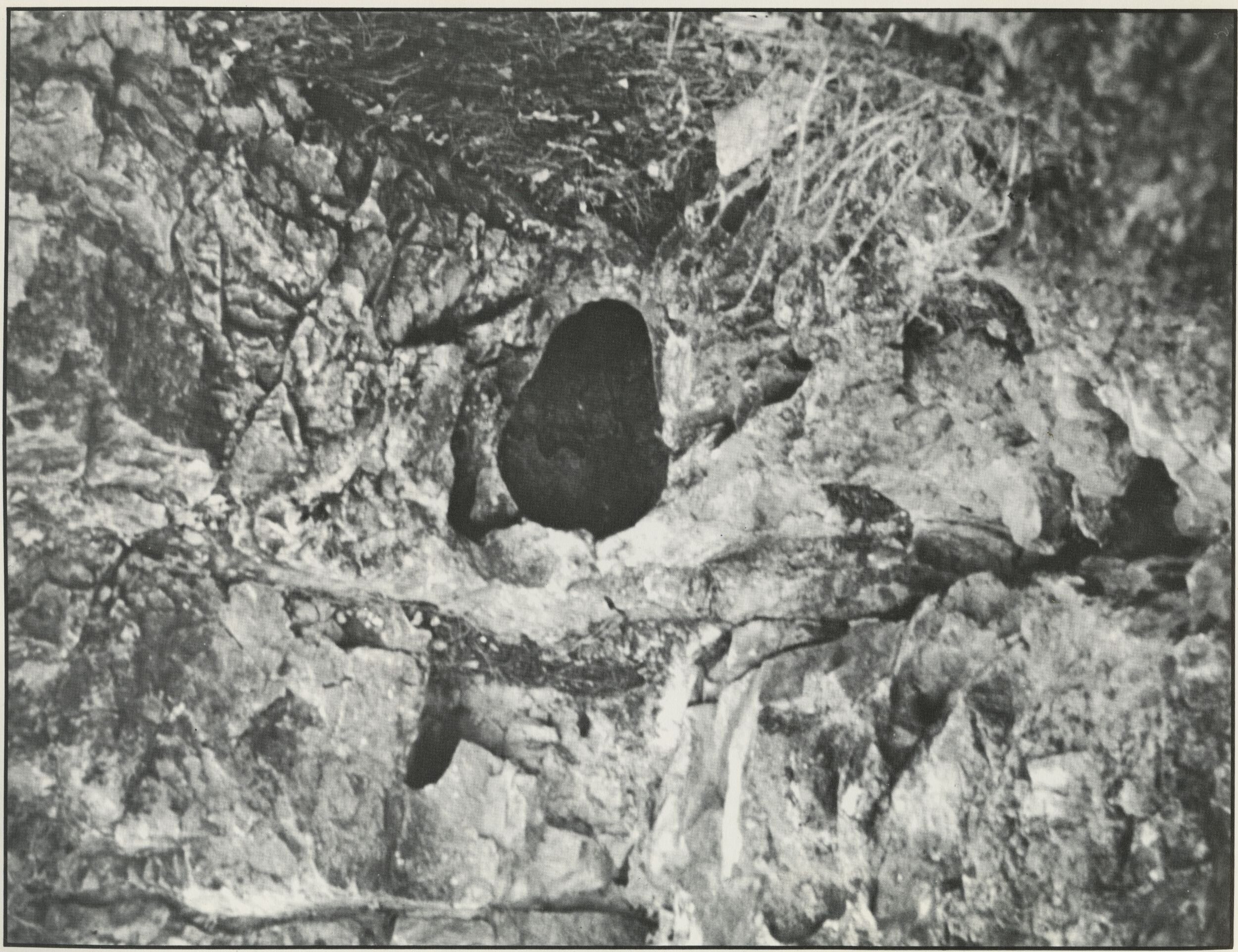
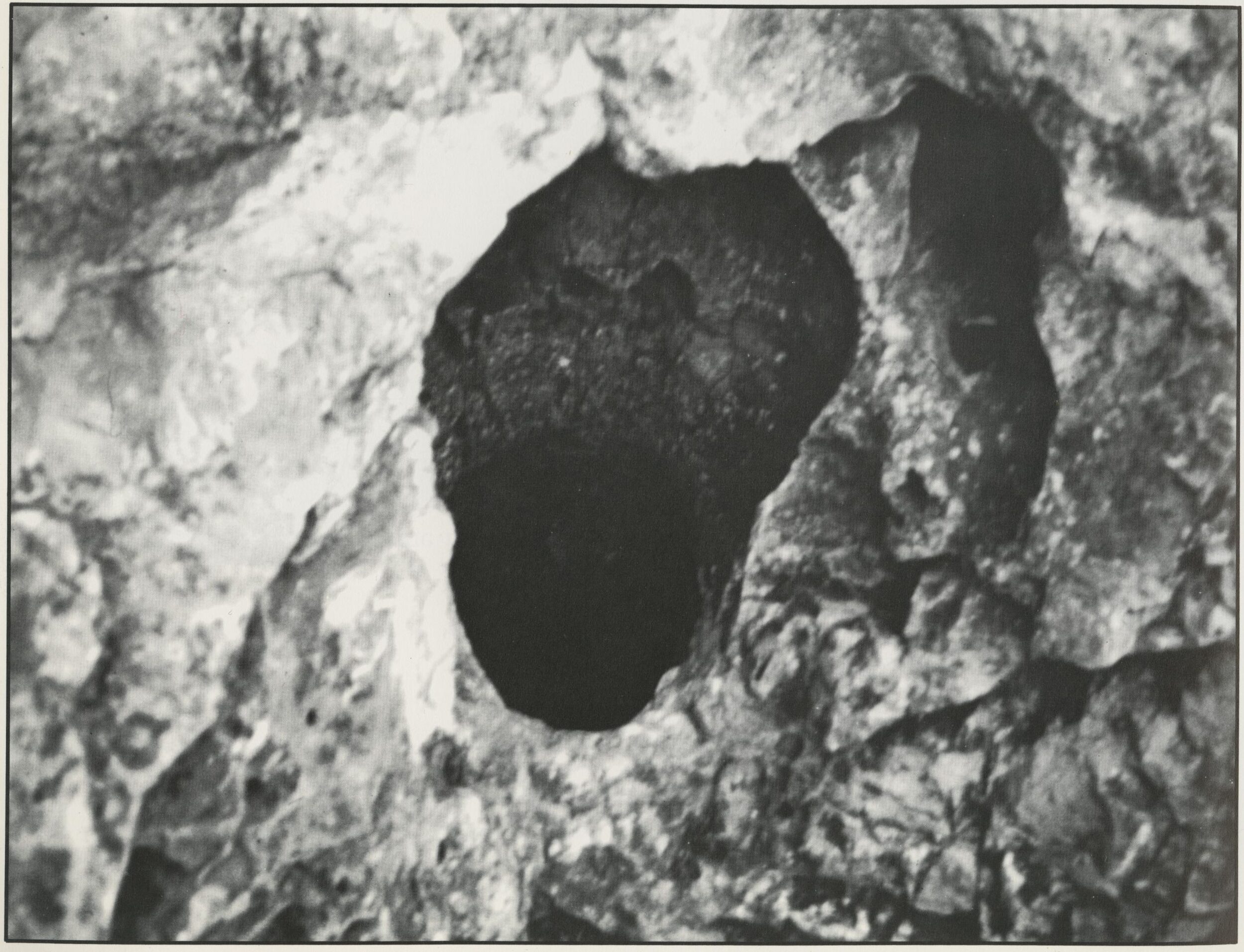
Within Lakȟóta epistemology, in which time is cyclical and coextensive of multiple simultaneous epochs, the Tȟuŋkášila Šákpe (Six Grandfathers) and their implicit Lakȟóta collective relationality inhere in the site Ȟe Sápa. The land, then as now, continues to breathe. Seven years after the Supreme Court decision in favor of the Lakȟóta Nation, Tom Charging Eagle and photographer Ron Zeilinger (b. 1945), who both worked at St. Joseph’s Indian School in Chamberlain, South Dakota, published Black Hills, Sacred Hills explaining Lakȟóta connections to Ȟe Sápa. They emphasize the site of Maȟká Oníye (literally “wind cave,” Lakȟóta for “breathing inside”), one of the oldest caves on the planet, formed over three hundred million years ago with channels running for miles beneath the hills’ surface and believed to be the sixth longest cave in the world. Its original entrance of only about eight to ten inches wide is located about thirty-five miles to the south of Tȟuŋkášila Šákpe. Two of Zeilinger’s photographs in the book represent the cavity through which Lakȟótas believe humans and bison first emerged on the earth’s breath.23 An image of a more distant view of this orifice in the earth (fig. 3) is followed by a close-up view (fig. 4); with the turn of a page, the photographs almost invoke a respiration—breathing in and then breathing out of the opening, which resembles the shape of a bison head. The photographs make an epistemological statement for the animacy of breathing rock across Ȟe Sápa.
Recognizing conflicting epistemologies—relational versus individualist, and Lakȟóta versus United States—draws attention away from the idealized sculpted faces and redirects it to the natural fractures and fissures in the heterogenous rock that frustrated the carvers during their work. The instabilities of the dynamic surface encompass and express the histories, violence, impositions, and disruptions of US settler colonialism and its legacies for Lakȟóta people. The tools of art history draw attention to concurrent and simultaneous memories to show the palimpsest of layered entangled meanings and memories perpetuating in place. If, as one historian put it, “Rushmore is a kind of forgetting,” then it is the role of art history to insist on remembering by considering histories and epistemologies in place, whether in Ȟe Sápa or in Italy.24
Cite this article: Emily C. Burns, “Place, Memory, and the Land’s Breath: A Palimpsest of Lakȟóta and US Epistemologies,” in “The Art History of the 250th Anniversary,” In the Round, edited by K. L. H. Wells, Panorama: Journal of the Association of Historians of American Art 12, no. 2 (Fall 2026), https://doi.org/10.24926/24716839.21497.
Notes
This text follows Lakȟóta diacritical markings from Jan Ullrich, New Lakota Dictionary: Lakȟótiyapi-English/English Lakȟótiyapi & Incorporating the Dakota Dialects of Yankton-Yanktonai & Santee-Sisseton (Lakota Language Consortium, 2008). The author thanks Kay Wells, Annika Fisher, Jessica Routhier, Emily Voelker, and Eleanor Harvey.
- The 2024 photographs are reproduced in Abigail Winograd and Christian Ayne Crouch, Jeffrey Gibson: The Space in Which to Place Me (DelMonico, 2025). ↵
- Emily C. Burns, Transnational Frontiers: The American West in France (University of Oklahoma Press, 2018), 118–41. ↵
- Key recent sources include Harriet Senie, Monumental Controversies: Mount Rushmore, Four Presidents, and the Quest for National Unity (University of Nebraska Press, 2023); Matthew Davis, A Biography of a Mountain: The Making and Meaning of Mount Rushmore (Saint Martin’s Press, 2025). ↵
- Quoted in Tom Charging Eagle and Ron Zeilinger, Black Hills, Sacred Hills (Tipi Press, St. Joseph’s Indian School, 1987), prologue, n.p. ↵
- Jeffrey Ostler, The Lakotas and the Black Hills: The Struggle for Sacred Ground (Viking, 2010), 76–77; John Taliaferro, Great White Fathers: The Story of the Obsessive Quest to Create Mount Rushmore (PublicAffairs, 2002), 27. ↵
- David Posthumus, All My Relatives: Exploring Lakota Ontology, Belief, and Ritual (University of Nebraska Press, 2018), 81. ↵
- Douglas L. Allen, Joanne Connauton, and Tyler McCreary, “Landscapes of White Supremacy and Settler Colonialism: Stone Mountain, Mount Rushmore, and the Contested Geographies of Memory in America,” GeoJournal 89, no. 71 (2024), https://doi.org/10.1007/s10708-024-11059-w. ↵
- H.R.792, submitted January 28, 2025, https://www.congress.gov/bill/119th-congress/house-bill/792/text; John Branch and Jeremy White, “Room for One More on Mount Rushmore? (The President Wants to Know.),” New York Times, June 27, 2025; Tom Lawrence, “The Story Behind Gov. Kristi Noem’s Weird Gift to Donald Trump,” Sun, September 5, 2021. ↵
- Ostler, Lakotas and the Black Hills, 62–76; Ostler, The Plains Sioux and US Colonialism from Lewis and Clark to Wounded Knee (Cambridge University Press, 2004). ↵
- Edward Lazarus, Black Hills / White Justice: The Sioux Nation Versus the United States; 1775 to the Present (HarperCollins, 1991), 119; Ostler, Lakotas and the Black Hills, 128. ↵
- Lazarus, Black Hills / White Justice, 138. ↵
- Ostler, Lakotas and the Black Hills, 164–66; Allen et al., “Landscapes of White Supremacy.” ↵
- Jesse Larner, Mount Rushmore: An Icon Reconsidered (Thunder’s Mouth / Nation Books, 2002), 90–91; Rex Allen Smith, The Carving of Mount Rushmore (Abbeville, 1985), 17–29; Gilbert C. Fite, Mount Rushmore (University of Oklahoma Press,1952), 5–6; Ostler, Lakotas and the Black Hills, 145–46; Davis, Biography of a Mountain, 111–14. ↵
- Lazarus, Black Hills / White Justice, 146. ↵
- Eve Tuck and K. Wayne Yang, “Decolonization Is Not a Metaphor,” Decolonization: Indigeneity, Education & Society 1, no. 1 (2012): 9–28. ↵
- Smith, Carving of Mount Rushmore, 25–26. ↵
- Doane Robinson, A history of the Dakota or Sioux Indians from their earliest traditions and first contact with white men to the final settlement of the last of them upon reservations and consequent abandonment of the old tribal life (Harvard University, 1904), 13. I have not yet consulted Robinson’s papers at the South Dakota Historical Society. ↵
- Doane Robinson, “Indian Claim on the Black Hills Revived,” Custer Weekly Chronicle, February 25, 1911, 3; John R. Brennan, “The Truth about the Hills Treaty,” Rapid City Journal, February 28, 1911, 1, 7. See also Ostler, Lakotas and the Black Hills, 132; Lazarus, Black Hills / White Justice, 128–30; and Davis, Biography of a Mountain, 115–16. ↵
- “Sioux Sue Nation for $700,000,000,” New York Times, May 7, 1923, 17; “Sioux Indians Sue US for 750 Million,” Deadwood Daily Pioneer-Times (South Dakota), May 10, 1923, 1; “Sue, Sioux, Sue!” Journal and Courier (Lafayette, IN), May 15, 1923, 6. ↵
- Ostler, Lakotas and the Black Hills, 144; Lazarus, Black Hills / White Justice, 175. ↵
- Ostler, Lakotas and the Black Hills, 147. ↵
- Davis, Biography of a Mountain, 136. ↵
- Davis, Biography of a Mountain, 4–5. ↵
- Larner, Mount Rushmore, 35. The Indigenous methodology of critical place inquiry addresses these very questions. See Eve Tuck and Marcia McKenzie, Place in Research: Theory, Methodology, and Methods (Routledge, 2015). ↵
About the Author(s): Emily C. Burns is professor of art history, Charles Marion Russell Memorial Chair, and Director of the Charles M. Russell Center for the Study of Art of the American West at the University of Oklahoma.